Compline 2024: The Fourth Sunday of Easter
Posted by Ken Peterson in Uncategorized on April 21, 2024
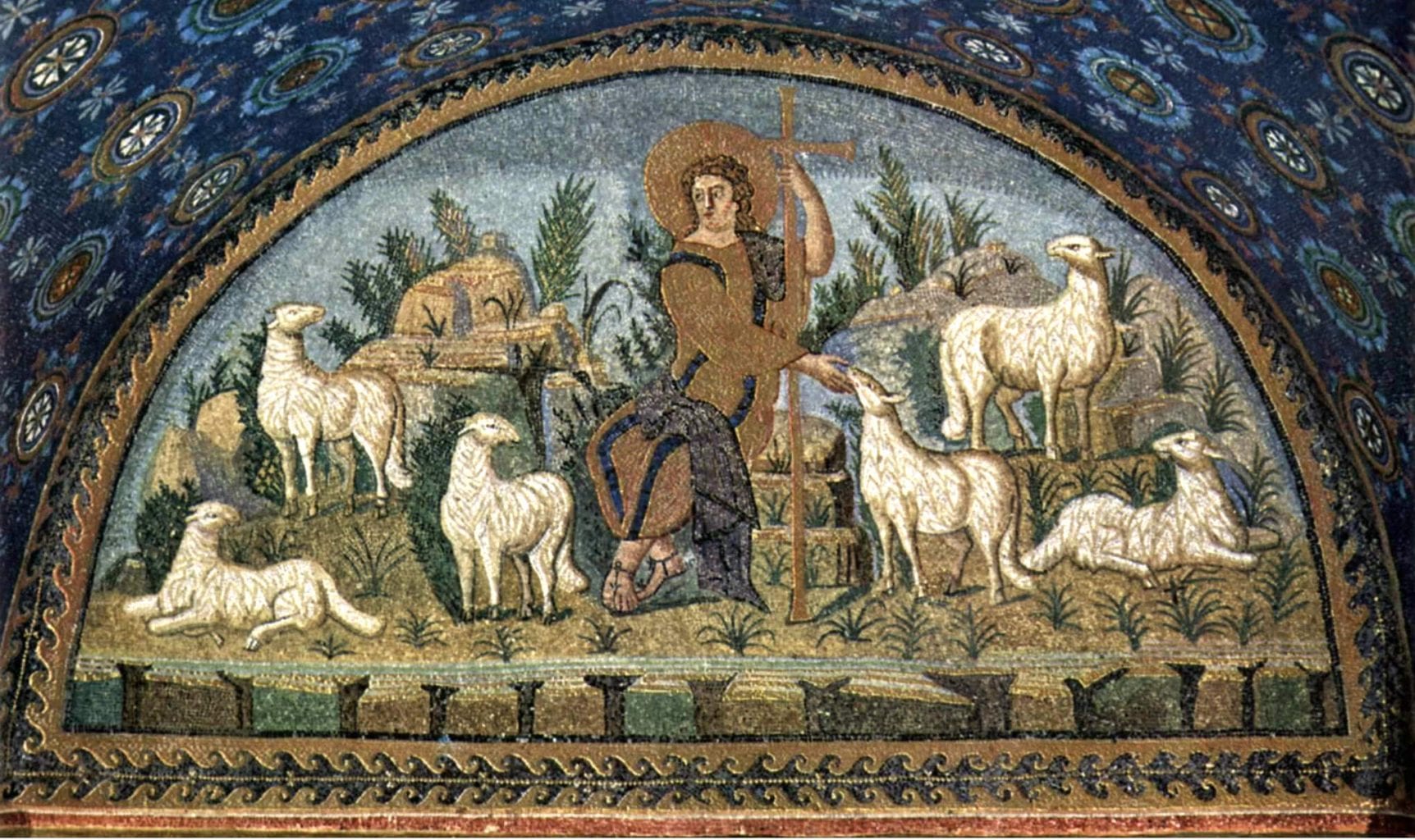
“Good Shepherd” mosaic (5th c.) – Galla Placidia Mausoleum, Ravenna, Italy
Compline is open to the public. For current restrictions or more information, go to the Compline Choir website.
The Compline Choir at Saint Mark’s Episcopal Cathedral in Seattle presents the Office of Compline live via video livestream and audio broadcast on Classical 98.1 KING-FM. Singers are fully compliant with current health guidance. The Compline Choir is a ministry of the Diocese of Olympia and of Saint Mark’s Episcopal Cathedral. The Compline service is offered every Sunday night at 9:30 PM Pacific Time.
Video livestream feeds:
Livestream at complinechoir.org
Livestream at The Compline Choir Facebook page
Livestream at saintmarks.org
Livestream at St. Mark’s Cathedral Facebook page
Video livestream archive:
(link to the livestream archive on saintmarks.org after the service)
Audio stream feeds:
Live broadcast on KING-FM (Sundays at 9:30 pm PDT)
(link to the podcast on complinepodcast.org when uploaded)
Compline for The Fourth Sunday of Easter
The READER begins with a Land Acknowledgment, then (on most days) reads a short passage selected from scripture.
LAND ACKNOWLEDGMENT
The Compline Choir and Saint Mark’s Cathedral acknowledge that we gather on the traditional land of the first people of Seattle, the Duwamish People, who are still here, and we honor with gratitude the land itself and the life of all the Coast Salish Tribes.
ORISON: The Lord is my Shepherd – Bobby McFerrin (b. 1950)
The Lord is my Shepard, I have all I need,
She makes me lie down in green meadows,
Beside the still waters, She will lead.
She restores my soul, She rights my wrongs,
She leads me in a path of good things,
And fills my heart with songs.
Even though I walk, through a dark & dreary land,
There is nothing that can shake me,
She has said She won’t forsake me,
I’m in her hand.
She sets a table before me, in the presence of my foes,
She anoints my head with oil,
And my cup overflows.
Surely, surely goodness & kindness will follow me,
All the days of my life,
And I will live in her house,
Forever, forever & ever.
PREPARATION
READER: The Lord Almighty grant us a quiet night and a perfect end.
CHOIR: Amen.
READER: Beloved in Christ, be sober, be vigilant; because your adversary the devil, as a roaring lion, walketh about, seeking whom he may devour: whom resist, steadfast in the faith. [I Peter 5: 8, 9a]
READER: But thou, O Lord, have mercy upon us.
CHOIR: Thanks be to God.
The following is chanted.
CANTOR: O God, make speed to save us;
CHOIR: O Lord, make haste to help us.
CANTOR: Glory be to the Father, and to the Son: and to the Holy Ghost;
CHOIR: As it was in the beginning, is now, and ever shall be: world without end. Amen.
CANTOR: Praise ye the Lord;
CHOIR: The Lord’s name be praiséd.
The READER announces the Psalm to be sung. The appointed psalms for Compline are Psalm 4 (Cum invocarem), Psalm 31:1-6 (In te, Domine, speravi), Psalm 91 (Qui habitat), and Psalm 134 (Ecce nunc). Other psalms may be used as appropriate to the church year. Many of the psalm settings sung in the service have been composed by Peter Hallock or Jason Anderson.
PSALM 23 (Setting I) – Peter R. Hallock (1924-2014)
[ANTIPHON:] I will dwell in the house of the LORD forever.
The LORD is my shepherd; *
I shall not be in want.
He makes me lie down in green pastures *
and leads me beside still waters.
He revives my soul *
and guides me along right pathways for his Name’s sake.
Though I walk through the valley of the shadow of death, I shall fear no evil; *
for you are with me; your rod and your staff, they comfort me.
You spread a table before me in the presence of those who trouble me; *
you have anointed my head with oil, and my cup is running over.
Surely your goodness and mercy shall follow me all the days of my life, *
and I will dwell in the house of the LORD for ever.
Glory to the Father, and to the Son, and to the Holy Spirit: *
as it was in the beginning, is now, and will be forever. Amen.
[ANTIPHON:] I will dwell in the house of the LORD forever.
Glory to the Father, and to the Son, and to the Holy Spirit: *
as it was in the beginning, is now, and will be forever. Amen.
The READER speaks the following lesson in Eastertide:
Now the God of peace, that brought again from the dead our Lord Jesus, that great Shepherd of the sheep, through the blood of the Everlasting Covenant, make you perfect in every good work to do his will, working in you that which is well-pleasing in his sight; through Jesus Christ, to whom be glory for ever and ever. Amen. — [Hebrews 13:20-21]
CHOIR: Thanks be to God.
The following Respond is chanted:
CANTOR: Into thy hands, O Lord, I commend my spirit. Alleluia, alleluia.
CHOIR: Into thy hands, O Lord, I commend my spirit. Alleluia, alleluia.
CANTOR: For thou hast redeeméd me, O Lord, thou God of truth;
CHOIR: Alleluia, alleluia.
CANTOR: Glory be to the Father, and to the Son, and to the Holy Ghost;
CHOIR: Into thy hands, O Lord, I commend my spirit. Alleluia, alleluia.
The READER announces the hymn to be sung. The hymn appointed for Compline is Te lucis ante terminum (Before the ending of the day). Other hymns may be sung as appropriate to the church year.
HYMN: Victimae Paschali laudes – Plainsong, Mode I; melody att. Wigbert (d. 1050?) and Christ the Lord is risen again (Tune: CHRIST IST ERSTANDEN) – harm. Hans Leo Hassler (1564-1612)
Christians, to the Paschal victim
offer your thankful praises!
A lamb the sheep redeemeth: Christ, who only is sinless,
reconcileth sinners to the Father.
Death and life have contended
in that combat stupendous:
the Prince of life, who died, reigns immortal.
Speak, Mary, declaring
what thou sawest, wayfaring:
“The tomb of Christ, who is living,
the glory of Jesus’ resurrection;
“Bright angels attesting,
the shroud and napkin resting.
“Yea, Christ my hope is arisen;
to Galilee he will go before you.”
Christ indeed from death is risen,
our new life obtaining;
have mercy, victor King, ever reigning
Amen. Alleluia!
The following is chanted:
CANTOR: Keep me as the apple of an eye;
CHOIR: Hide me under the shadow of thy wings.
NUNC DIMITTIS from First Fauxbourdon Service – Philip Moore (b. 1943)
A setting of the Nunc dimittis (from Luke 2:29-32, with Gloria Patri) is sung. The text may be from the King James version or from one of several modern translations. An antiphon precedes and follows it:
ANTIPHON: Preserve us, O Lord, while waking, and guard us while sleeping; that awake we may watch with Christ, and asleep we may rest in peace.
Lord, now lettest thou thy servant depart in peace: * according to thy word;
For mine eyes have seen thy salvation, * which thou hast prepared before the face of all people.
To be a light to lighten the Gentiles: * and the glory of thy people Israel.
Glory be to the Father, and to the Son, * and to the Holy Spirit;
As it was in the beginning, is now, and will be forever. Amen.
The Apostles Creed is intoned by the choir. The Assembly rises.
CANTOR: I believe in God,
CHOIR: the Father almighty, maker of heaven and earth; and in Jesus Christ his only Son our Lord; who was conceived by the Holy Ghost, born of the Virgin Mary, suffered under Pontius Pilate, was crucified, dead, and buried. He descended into hell. The third day he rose again from the dead. He ascended into heaven, and sitteth at the right hand of God the Father almighty. From thence he shall come to judge the quick and the dead. I believe in the Holy Ghost, the holy catholic church, the communion of saints, the forgiveness of sins, the resurrection of the body, and the life everlasting. Amen.
THE PRAYERS
CANTOR: Lord, have mercy upon us.
CHOIR: Christ, have mercy upon us.
CANTOR: Lord, have mercy upon us.
The Lord’s Prayer and the following versicles and responses are intoned:
CANTOR: Our Father,
CHOIR: who art in heaven, hallowed be thy name. Thy kingdom come. Thy will be done, on earth as it is in heaven. Give us this day our daily bread, and forgive us our trespasses as we forgive those who trespass against us, and lead us not into temptation, but deliver us from evil. Amen.
CANTOR: Blessed art thou, Lord God of our fathers;
CHOIR: To be praised and glorified above all for ever.
CANTOR: Let us bless the Father, the Son, and the Holy Ghost;
CHOIR: Let us praise him and magnify him for ever.
CANTOR: Blessed art thou, O Lord, in the firmament of heaven;
CHOIR: To be praised and glorified above all for ever.
CANTOR: The Almighty and merciful Lord guard us and give us his blessing.
CHOIR: Amen.
The Confession and Absolution are spoken:
READER: Let us humbly confess our sins unto Almighty God.
CHOIR: We confess to God Almighty, the Father, the Son, and the Holy Ghost, that we have sinned in thought, word, and deed, through our own grievous fault. Wherefore we pray God to have mercy upon us.
CHOIR: Almighty God, have mercy upon us, forgive us all our sins and deliver us from all evil, confirm and strengthen us in all goodness, and bring us to life everlasting. Through Jesus Christ our Lord. Amen.
READER: May the almighty and merciful Lord grant unto us pardon and remission of all our sins, time for amendment of life, and the grace and comfort of the Holy Spirit.
CHOIR: Amen.
The following versicles and responses are chanted:
CANTOR: Wilt thou not turn again and quicken us;
CHOIR: That thy people may rejoice in thee?
CANTOR: O Lord, shew thy mercy upon us;
CHOIR: And grant us thy salvation.
CANTOR: Vouchsafe, O Lord, to keep us this night without sin;
CHOIR: O Lord, have mercy upon us, have mercy upon us.
CANTOR: O Lord, hear our prayer;
CHOIR: And let our cry come unto thee.
CANTOR: Let us pray.
At least three but not more than five prayers (or collects) are intoned by the CANTOR. The first collect is proper to the day:
THE FOURTH SUNDAY OF EASTER
O God, whose Son Jesus is the good shepherd of thy people; Grant that when we hear his voice we may know him who calleth us each by name, and follow where he doth lead; who, with thee and the Holy Spirit, liveth and reigneth, one God, for ever and ever. Amen.
Other collects offered address the needs and concerns of the choir, or local or global community. The final collect is chosen from the following:
Keep watch, dear Lord, with those who work, or watch, or weep this night, and give your angels charge over those who sleep. Tend the sick, Lord Christ; give rest to the weary, bless the dying, soothe the suffering, pity the afflicted, shield the joyous; and all for your love’s sake.
Or
O Lord, who by triumphing over the powers of darkness didst prepare our place in the new Jerusalem: Grant us, who have this day given thanks for thy resurrection, to praise thee in that city, whereof thou art the light; where with the Father and the Holy Ghost, thou livest and reigned one God, world without end.
CHOIR: Amen.
The READER announces the anthem to be sung.
ANTHEM: Abendgebet [U.S. premiere] – Jacob Beranek (b. 1998)
[German]
Herr, mein Gott, Ich danke dir, daß du
diesen Tag zu Ende gebracht hast;
ich danke dir, daß du Leib und Seele
zur Ruhe kommen läßt.
Deine Hand war über mir und hat mich
behütet und bewahrt.
Vergib allen Kleinglauben und alles
Unrecht dieses Tages
und hilf, daß ich allen vergebe,
die mir Unrecht getan haben.
Laß mich in Frieden
unter deinem Schutz schlafen
und bewahre mich vor den
Anfechtungen der Finsternis.
Ich befehle dir die Meinen,
ich befehle dir dieses Haus,
ich befehle dir meinen Leib und meine Seele.
Gott, dein heiliger Name sei gelobt.
[English Translation]
Lord, my God, I thank you that you
have brought this day to a close;
I thank you that you have allowed
my body and soul to come to rest.
Your hand was over me
and has protected and preserved me.
Forgive all the lack of faith and
all the injustice of this day,
and help me to forgive all
who have done injustice towards me.
Allow me in peace
to sleep beneath your protection,
and defend me from the
spiritual crises of darkness.
I commend to you all that is mine,
I commend to you this house,
I commend to you my body and my soul.
God, your holy name be praised.
FINAL RESPONSES and BLESSING
The CHOIR sings the final versicles and responses, using a setting composed by Peter Hallock in 1956, the year of the Compline Choir’s founding:
CANTOR: We will lay us down in peace and take our rest:
CHOIR: For it is thou, Lord, only that makest us to dwell in safety.
CANTOR: The Lord be with you:
CHOIR: And with thy spirit.
CANTOR: Let us bless the Lord:
CHOIR: Thanks be to God.
The closing blessing is spoken:
READER: The Almighty and merciful Lord, the Father, the Son, and the Holy Ghost, bless and preserve us.
CHOIR: Amen.
Compline 2024: The Third Sunday of Easter
Posted by Ken Peterson in Uncategorized on April 14, 2024
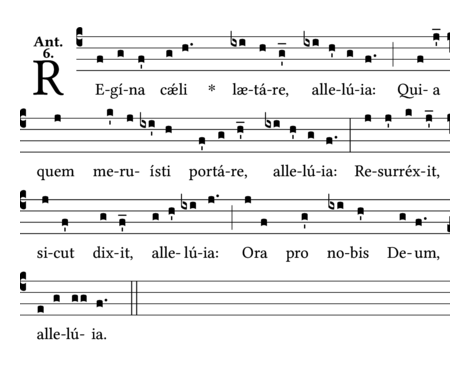
“Queen of Heaven, rejoice!” – sung at the end of Compline from Easter to Pentecost
Compline is open to the public. For current restrictions or more information, go to the Compline Choir website.
The Compline Choir at Saint Mark’s Episcopal Cathedral in Seattle presents the Office of Compline live via video livestream and audio broadcast on Classical 98.1 KING-FM. Singers are fully compliant with current health guidance. The Compline Choir is a ministry of the Diocese of Olympia and of Saint Mark’s Episcopal Cathedral. The Compline service is offered every Sunday night at 9:30 PM Pacific Time.
Video livestream feeds:
Livestream at complinechoir.org
Livestream at The Compline Choir Facebook page
Livestream at saintmarks.org
Livestream at St. Mark’s Cathedral Facebook page
Video livestream archive:
(link to the livestream archive on saintmarks.org after the service)
Audio stream feeds:
Live broadcast on KING-FM (Sundays at 9:30 pm PDT)
(link to the podcast on complinepodcast.org when uploaded)
Compline for The Third Sunday of Easter
The READER begins with a Land Acknowledgment, then (on most days) reads a short passage selected from scripture.
LAND ACKNOWLEDGMENT
The Compline Choir and Saint Mark’s Cathedral acknowledge that we gather on the traditional land of the first people of Seattle, the Duwamish People, who are still here, and we honor with gratitude the land itself and the life of all the Coast Salish Tribes.
ORISON: This joyful Eastertide (Tune: VRUECHTEN) – mel. from Psalmen, 1685; harm. Charles Wood (1866-1926)
This joyful Eastertide, away with sin and sorrow!
My Love, the Crucified, hath sprung to life this morrow.
[Refrain:]
Had Christ, that once was slain,
ne’er burst his three-day prison,
our faith had been in vain;
But now hath Christ arisen,
arisen, arisen, arisen.
Death’s flood hath lost its chill since Jesus crossed the river;
Lord of all life, from ill my passing soul deliver. [Refrain]
My flesh in hope shall rest and for a season slumber,
’til trump from east to west shall wake the dead in number. [Refrain]
PREPARATION
READER: The Lord Almighty grant us a quiet night and a perfect end.
CHOIR: Amen.
READER: Beloved in Christ, be sober, be vigilant; because your adversary the devil, as a roaring lion, walketh about, seeking whom he may devour: whom resist, steadfast in the faith. [I Peter 5: 8, 9a]
READER: But thou, O Lord, have mercy upon us.
CHOIR: Thanks be to God.
The following is chanted.
CANTOR: O God, make speed to save us;
CHOIR: O Lord, make haste to help us.
CANTOR: Glory be to the Father, and to the Son: and to the Holy Ghost;
CHOIR: As it was in the beginning, is now, and ever shall be: world without end. Amen.
CANTOR: Praise ye the Lord;
CHOIR: The Lord’s name be praiséd.
The READER announces the Psalm to be sung. The appointed psalms for Compline are Psalm 4 (Cum invocarem), Psalm 31:1-6 (In te, Domine, speravi), Psalm 91 (Qui habitat), and Psalm 134 (Ecce nunc). Other psalms may be used as appropriate to the church year. Many of the psalm settings sung in the service have been composed by Peter Hallock or Jason Anderson.
PSALMS 134 & 4 – Peter R. Hallock (1924-2014)
Psalm 134 (antiphon):
Behold now, bless the LORD, all you servants of the LORD, *
you that stand by night in the house of the LORD.
Lift up your hands in the holy place and bless the LORD; *
the LORD who made heaven and earth bless you out of Zion.
Psalm 4
Answer me when I call, O God, defender of my cause; *
you set me free when I am hard-pressed; have mercy on me and hear my prayer.
“You mortals, how long will you dishonor my glory; *
how long will you worship dumb idols and run after false gods?”
Know that the LORD does wonders for the faithful; *
when I call upon the LORD, he will hear me.
Tremble, then, and do not sin; *
speak to your heart in silence upon your bed.
Offer the appointed sacrifices *
and put your trust in the LORD.
Many are saying, “Oh, that we might see better times!” *
Lift up the light of your countenance upon us, O LORD.
You have put gladness in my heart, *
more than when grain and wine and oil increase.
I lie down in peace; at once I fall asleep; *
for only you, LORD, make me dwell in safety.
(antiphon)
Behold now, bless the LORD, all you servants of the LORD, *
you that stand by night in the house of the LORD.
Lift up your hands in the holy place and bless the LORD; *
the LORD who made heaven and earth bless you out of Zion.
Glory to the Father, and to the Son, and to the Holy Spirit: *
as it was in the beginning, is now, and will be forever. Amen.
The READER speaks the following lesson in Eastertide:
Now the God of peace, that brought again from the dead our Lord Jesus, that great Shepherd of the sheep, through the blood of the Everlasting Covenant, make you perfect in every good work to do his will, working in you that which is well-pleasing in his sight; through Jesus Christ, to whom be glory for ever and ever. Amen. — [Hebrews 13:20-21]
CHOIR: Thanks be to God.
The following Respond is chanted:
CANTOR: Into thy hands, O Lord, I commend my spirit. Alleluia, alleluia.
CHOIR: Into thy hands, O Lord, I commend my spirit. Alleluia, alleluia.
CANTOR: For thou hast redeeméd me, O Lord, thou God of truth;
CHOIR: Alleluia, alleluia.
CANTOR: Glory be to the Father, and to the Son, and to the Holy Ghost;
CHOIR: Into thy hands, O Lord, I commend my spirit. Alleluia, alleluia.
The READER announces the hymn to be sung. The hymn appointed for Compline is Te lucis ante terminum (Before the ending of the day). Other hymns may be sung as appropriate to the church year.
HYMN: Lift your voice rejoicing, Mary (Tune: FISK OF GLOUCESTER) – Thomas Foster (1938-2024)
Lift your voice rejoicing, Mary,
Christ has risen from the tomb;
on the cross a suffering victim,
now as victor he is come.
Whom your tears in death were mourning,
welcome with your smiles returning.
Let your alleluias rise!
Raise your weary eyelids, Mary,
see him living evermore;
see his countenance, how gracious,
see the wounds for you he bore.
All the glory of the morning
pales before those wounds redeeming.
Let your alleluias rise!
Life is yours for ever, Mary,
for your light is come once more
and the strength of death is broken;
now your songs of joy outpour.
Ended now the night of sorrow,
love has brought the blessed morrow.
Let your alleluias rise.
The following is chanted:
CANTOR: Keep me as the apple of an eye;
CHOIR: Hide me under the shadow of thy wings.
NUNC DIMITTIS – Plainsong, Tone I; harm. Thomas Morley (1557-1602)
A setting of the Nunc dimittis (from Luke 2:29-32, with Gloria Patri) is sung. The text may be from the King James version or from one of several modern translations. An antiphon precedes and follows it:
ANTIPHON: Preserve us, O Lord, while waking, and guard us while sleeping; that awake we may watch with Christ, and asleep we may rest in peace.
Lord, now lettest thou thy servant depart in peace: * according to thy word;
For mine eyes have seen thy salvation, * which thou hast prepared before the face of all people.
To be a light to lighten the Gentiles: * and the glory of thy people Israel.
Glory be to the Father, and to the Son, * and to the Holy Spirit;
As it was in the beginning, is now, and will be forever. Amen.
The Apostles Creed is intoned by the choir. The Assembly rises.
CANTOR: I believe in God,
CHOIR: the Father almighty, maker of heaven and earth; and in Jesus Christ his only Son our Lord; who was conceived by the Holy Ghost, born of the Virgin Mary, suffered under Pontius Pilate, was crucified, dead, and buried. He descended into hell. The third day he rose again from the dead. He ascended into heaven, and sitteth at the right hand of God the Father almighty. From thence he shall come to judge the quick and the dead. I believe in the Holy Ghost, the holy catholic church, the communion of saints, the forgiveness of sins, the resurrection of the body, and the life everlasting. Amen.
THE PRAYERS
CANTOR: Lord, have mercy upon us.
CHOIR: Christ, have mercy upon us.
CANTOR: Lord, have mercy upon us.
The Lord’s Prayer and the following versicles and responses are intoned:
CANTOR: Our Father,
CHOIR: who art in heaven, hallowed be thy name. Thy kingdom come. Thy will be done, on earth as it is in heaven. Give us this day our daily bread, and forgive us our trespasses as we forgive those who trespass against us, and lead us not into temptation, but deliver us from evil. Amen.
CANTOR: Blessed art thou, Lord God of our fathers;
CHOIR: To be praised and glorified above all for ever.
CANTOR: Let us bless the Father, the Son, and the Holy Ghost;
CHOIR: Let us praise him and magnify him for ever.
CANTOR: Blessed art thou, O Lord, in the firmament of heaven;
CHOIR: To be praised and glorified above all for ever.
CANTOR: The Almighty and merciful Lord guard us and give us his blessing.
CHOIR: Amen.
The Confession and Absolution are spoken:
READER: Let us humbly confess our sins unto Almighty God.
CHOIR: We confess to God Almighty, the Father, the Son, and the Holy Ghost, that we have sinned in thought, word, and deed, through our own grievous fault. Wherefore we pray God to have mercy upon us.
CHOIR: Almighty God, have mercy upon us, forgive us all our sins and deliver us from all evil, confirm and strengthen us in all goodness, and bring us to life everlasting. Through Jesus Christ our Lord. Amen.
READER: May the almighty and merciful Lord grant unto us pardon and remission of all our sins, time for amendment of life, and the grace and comfort of the Holy Spirit.
CHOIR: Amen.
The following versicles and responses are chanted:
CANTOR: Wilt thou not turn again and quicken us;
CHOIR: That thy people may rejoice in thee?
CANTOR: O Lord, shew thy mercy upon us;
CHOIR: And grant us thy salvation.
CANTOR: Vouchsafe, O Lord, to keep us this night without sin;
CHOIR: O Lord, have mercy upon us, have mercy upon us.
CANTOR: O Lord, hear our prayer;
CHOIR: And let our cry come unto thee.
CANTOR: Let us pray.
At least three but not more than five prayers (or collects) are intoned by the CANTOR. The first collect is proper to the day:
THE THIRD SUNDAY OF EASTER
O God, whose blessed Son did manifest himself to his disciples in the breaking of bread: Open, we pray thee, the eyes of our faith, that we may behold him in all his redeeming work; through the same thy Son Jesus Christ our Lord, who liveth and reigneth with thee, in the unity of the Holy Spirit, one God, now and for ever. Amen.
Other collects offered address the needs and concerns of the choir, or local or global community. The final collect is chosen from the following:
Keep watch, dear Lord, with those who work, or watch, or weep this night, and give your angels charge over those who sleep. Tend the sick, Lord Christ; give rest to the weary, bless the dying, soothe the suffering, pity the afflicted, shield the joyous; and all for your love’s sake.
Or
O Lord, who by triumphing over the powers of darkness didst prepare our place in the new Jerusalem: Grant us, who have this day given thanks for thy resurrection, to praise thee in that city, whereof thou art the light; where with the Father and the Holy Ghost, thou livest and reigned one God, world without end.
CHOIR: Amen.
The READER announces the anthem to be sung.
ANTHEM: Regina caeli – Robert White (c. 1538-1574)
[Latin]
Regina caeli, laetare, alleluia;
Quia quem meruisti portare, alleluia,
Resurrexit, sicut dixit, alleluia:
Ora pro nobis Deum, alleluia.
[English]
Queen of heaven, rejoice, alleluia.
The Son you merited to bear, alleluia,
Has risen as he said, alleluia.
Pray to God for us, alleluia.
FINAL RESPONSES and BLESSING
The CHOIR sings the final versicles and responses, using a setting composed by Peter Hallock in 1956, the year of the Compline Choir’s founding:
CANTOR: We will lay us down in peace and take our rest:
CHOIR: For it is thou, Lord, only that makest us to dwell in safety.
CANTOR: The Lord be with you:
CHOIR: And with thy spirit.
CANTOR: Let us bless the Lord:
CHOIR: Thanks be to God.
The closing blessing is spoken:
READER: The Almighty and merciful Lord, the Father, the Son, and the Holy Ghost, bless and preserve us.
CHOIR: Amen.
Compline 2024: The Second Sunday of Easter
Posted by Ken Peterson in Uncategorized on April 7, 2024
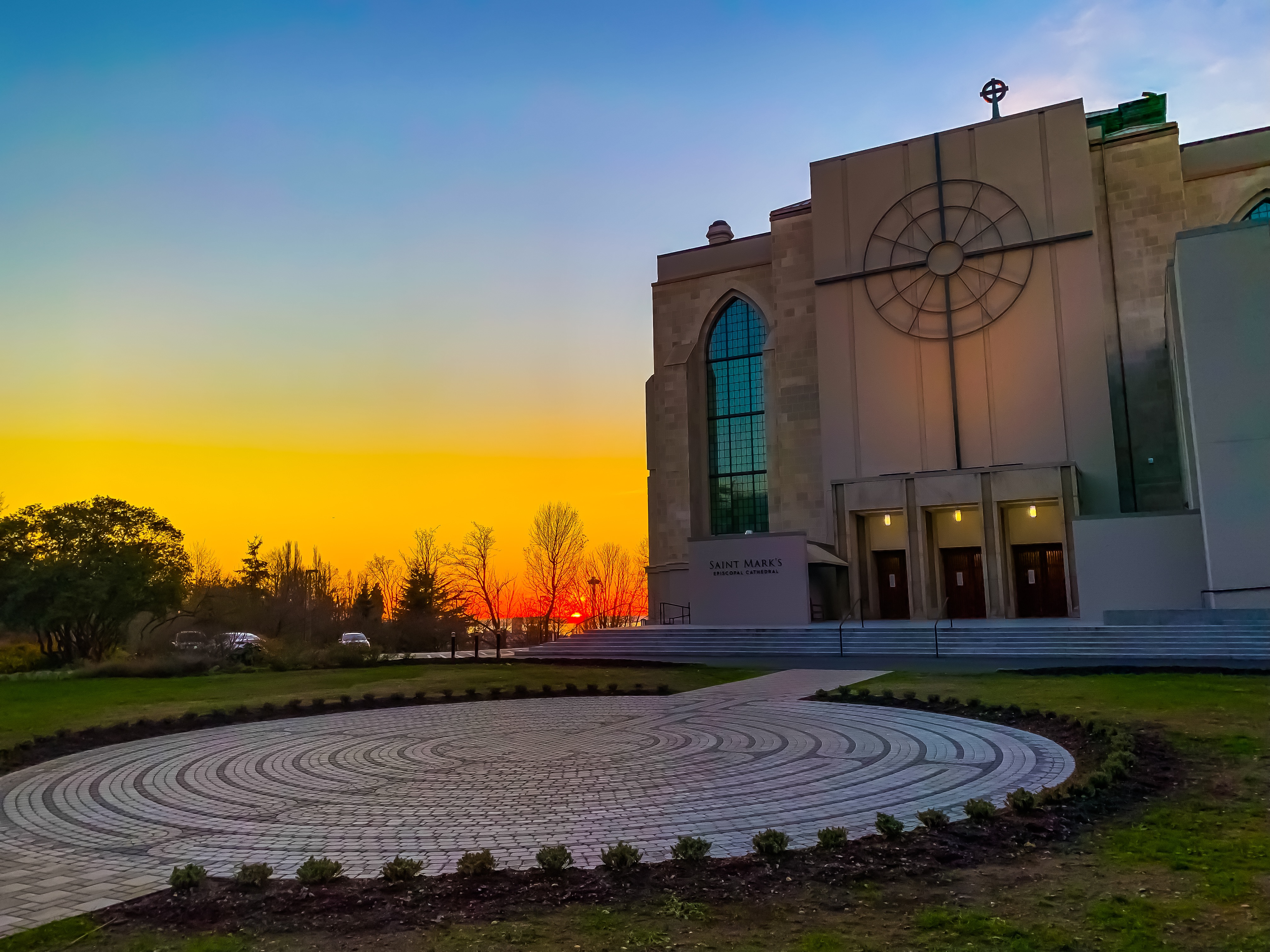
St. Mark’s Cathedral – Morning
Compline is open to the public. For current restrictions or more information, go to the Compline Choir website.
The Compline Choir at Saint Mark’s Episcopal Cathedral in Seattle presents the Office of Compline live via video livestream and audio broadcast on Classical 98.1 KING-FM. Singers are fully compliant with current health guidance. The Compline Choir is a ministry of the Diocese of Olympia and of Saint Mark’s Episcopal Cathedral. The Compline service is offered every Sunday night at 9:30 PM Pacific Time.
Video livestream feeds:
Livestream at complinechoir.org
Livestream at The Compline Choir Facebook page
Livestream at saintmarks.org
Livestream at St. Mark’s Cathedral Facebook page
Video livestream archive:
(link to the livestream archive on saintmarks.org after the service)
Audio stream feeds:
Live broadcast on KING-FM (Sundays at 9:30 pm PDT)
(link to the podcast on complinepodcast.org when uploaded)
Compline for The Second Sunday of Easter
The READER begins with a Land Acknowledgment, then (on most days) reads a short passage selected from scripture.
LAND ACKNOWLEDGMENT
The Compline Choir and Saint Mark’s Cathedral acknowledge that we gather on the traditional land of the first people of Seattle, the Duwamish People, who are still here, and we honor with gratitude the land itself and the life of all the Coast Salish Tribes.
ORISON: Alleluia! O sons and daughters, let us sing! (Tune: O FILII ET FILIAE) – mel. from Airs sur les hymnes sacrez, odes et noëls, 1623)
Alleluia, alleluia, alleluia!
O sons and daughters, let us sing!
The King of heaven, the glorious King,
o’er death and hell rose triumphing.
Alleluia!
That night the apostles met in fear;
amidst them came their Lord most dear,
and said, “My peace be on all here.”
Alleluia!
When Thomas first the tidings heard,
how they had seen the risen Lord,
he doubted the disciples’ word.
Alleluia!
“My pierced side, O Thomas, see;
my hands, my feet, I show to thee;
not faithless but believing be.”
Alleluia!
No longer Thomas then denied;
he saw the feet, the hands, the side.
“Thou art my Lord and God,” he cried.
Alleluia!
How blest are they who have not seen,
and yet whose faith has constant been,
for they eternal life shall win.
Alleluia!
Alleluia, alleluia, alleluia!
PREPARATION
READER: The Lord Almighty grant us a quiet night and a perfect end.
CHOIR: Amen.
READER: Beloved in Christ, be sober, be vigilant; because your adversary the devil, as a roaring lion, walketh about, seeking whom he may devour: whom resist, steadfast in the faith. [I Peter 5: 8, 9a]
READER: But thou, O Lord, have mercy upon us.
CHOIR: Thanks be to God.
The following is chanted.
CANTOR: O God, make speed to save us;
CHOIR: O Lord, make haste to help us.
CANTOR: Glory be to the Father, and to the Son: and to the Holy Ghost;
CHOIR: As it was in the beginning, is now, and ever shall be: world without end. Amen.
CANTOR: Praise ye the Lord;
CHOIR: The Lord’s name be praiséd.
The READER announces the Psalm to be sung. The appointed psalms for Compline are Psalm 4 (Cum invocarem), Psalm 31:1-6 (In te, Domine, speravi), Psalm 91 (Qui habitat), and Psalm 134 (Ecce nunc). Other psalms may be used as appropriate to the church year. Many of the psalm settings sung in the service have been composed by Peter Hallock or Jason Anderson.
PSALM 133 – Anglican Chant setting based on a theme from Chichester Psalms by Leonard Bernstein (1918-1990); adapt. Jason A. Anderson (b. 1976)
Behold, how good and pleasant it is, *
when brethren live together in unity!
It is like fine oil upon the head *
that runs down upon the beard,
Upon the beard of Aaron, *
and runs down upon the collar of his robe.
It is like the dew of Hermon *
that falls upon the hills of Zion.
For there the LORD has ordained the blessing: *
life for evermore.
Glory to the Father, and to the Son, and to the Holy Spirit: *
as it was in the beginning, is now, and will be forever. Amen.
The READER speaks the following lesson in Eastertide:
Now the God of peace, that brought again from the dead our Lord Jesus, that great Shepherd of the sheep, through the blood of the Everlasting Covenant, make you perfect in every good work to do his will, working in you that which is well-pleasing in his sight; through Jesus Christ, to whom be glory for ever and ever. Amen. — [Hebrews 13:20-21]
CHOIR: Thanks be to God.
The following Respond is chanted:
CANTOR: Into thy hands, O Lord, I commend my spirit. Alleluia, alleluia.
CHOIR: Into thy hands, O Lord, I commend my spirit. Alleluia, alleluia.
CANTOR: For thou hast redeeméd me, O Lord, thou God of truth;
CHOIR: Alleluia, alleluia.
CANTOR: Glory be to the Father, and to the Son, and to the Holy Ghost;
CHOIR: Into thy hands, O Lord, I commend my spirit. Alleluia, alleluia.
The READER announces the hymn to be sung. The hymn appointed for Compline is Te lucis ante terminum (Before the ending of the day). Other hymns may be sung as appropriate to the church year.
HYMN: That Easter Day with joy was bright (Tune: PUER NOBIS) – mel. from Trier MS., 15th cent.; adapt. Michael Praetorius (1571-1621); harm. George R. Woodward (1848-1934)
That Easter day with joy was bright:
The sun shone out with fairer light
When to their longing eyes restored,
Th’apostles saw their risen Lord.
His risen flesh with radiance glowed,
His wounded hands and feet he showed;
Those scars their solemn witness gave
That Christ was risen from the grave.
O Lord of all, with us abide
In this, our joyful Easter-tide;
From ev’ry weapon death can wield
Thine own redeemed forever shield.
All praise, O risen Lord, we give
To thee, who dead, again dost live;
To God the Father equal praise,
And God the Holy Ghost, we raise.
The following is chanted:
CANTOR: Keep me as the apple of an eye;
CHOIR: Hide me under the shadow of thy wings.
NUNC DIMITTIS – Anonymous [No. 29], Lumley Books, c. 1547-1552
A setting of the Nunc dimittis (from Luke 2:29-32, with Gloria Patri) is sung. The text may be from the King James version or from one of several modern translations. An antiphon precedes and follows it:
ANTIPHON: Preserve us, O Lord, while waking, and guard us while sleeping; that awake we may watch with Christ, and asleep we may rest in peace.
Lord, now lettest thou thy servant depart in peace: * according to thy word;
For mine eyes have seen thy salvation, * which thou hast prepared before the face of all people.
To be a light to lighten the Gentiles: * and the glory of thy people Israel.
Glory be to the Father, and to the Son, * and to the Holy Spirit;
As it was in the beginning, is now, and will be forever. Amen.
The Apostles Creed is intoned by the choir. The Assembly rises.
CANTOR: I believe in God,
CHOIR: the Father almighty, maker of heaven and earth; and in Jesus Christ his only Son our Lord; who was conceived by the Holy Ghost, born of the Virgin Mary, suffered under Pontius Pilate, was crucified, dead, and buried. He descended into hell. The third day he rose again from the dead. He ascended into heaven, and sitteth at the right hand of God the Father almighty. From thence he shall come to judge the quick and the dead. I believe in the Holy Ghost, the holy catholic church, the communion of saints, the forgiveness of sins, the resurrection of the body, and the life everlasting. Amen.
THE PRAYERS
CANTOR: Lord, have mercy upon us.
CHOIR: Christ, have mercy upon us.
CANTOR: Lord, have mercy upon us.
The Lord’s Prayer and the following versicles and responses are intoned:
CANTOR: Our Father,
CHOIR: who art in heaven, hallowed be thy name. Thy kingdom come. Thy will be done, on earth as it is in heaven. Give us this day our daily bread, and forgive us our trespasses as we forgive those who trespass against us, and lead us not into temptation, but deliver us from evil. Amen.
CANTOR: Blessed art thou, Lord God of our fathers;
CHOIR: To be praised and glorified above all for ever.
CANTOR: Let us bless the Father, the Son, and the Holy Ghost;
CHOIR: Let us praise him and magnify him for ever.
CANTOR: Blessed art thou, O Lord, in the firmament of heaven;
CHOIR: To be praised and glorified above all for ever.
CANTOR: The Almighty and merciful Lord guard us and give us his blessing.
CHOIR: Amen.
The Confession and Absolution are spoken:
READER: Let us humbly confess our sins unto Almighty God.
CHOIR: We confess to God Almighty, the Father, the Son, and the Holy Ghost, that we have sinned in thought, word, and deed, through our own grievous fault. Wherefore we pray God to have mercy upon us.
CHOIR: Almighty God, have mercy upon us, forgive us all our sins and deliver us from all evil, confirm and strengthen us in all goodness, and bring us to life everlasting. Through Jesus Christ our Lord. Amen.
READER: May the almighty and merciful Lord grant unto us pardon and remission of all our sins, time for amendment of life, and the grace and comfort of the Holy Spirit.
CHOIR: Amen.
The following versicles and responses are chanted:
CANTOR: Wilt thou not turn again and quicken us;
CHOIR: That thy people may rejoice in thee?
CANTOR: O Lord, shew thy mercy upon us;
CHOIR: And grant us thy salvation.
CANTOR: Vouchsafe, O Lord, to keep us this night without sin;
CHOIR: O Lord, have mercy upon us, have mercy upon us.
CANTOR: O Lord, hear our prayer;
CHOIR: And let our cry come unto thee.
CANTOR: Let us pray.
At least three but not more than five prayers (or collects) are intoned by the CANTOR. The first collect is proper to the day:
THE SECOND SUNDAY OF EASTER
Almighty and everlasting God, who in the Paschal mystery established the new covenant of reconciliation: Grant that all who have been reborn into the fellowship of Christ’s Body may show forth in their lives what they profess by their faith; through Jesus Christ our Lord, who lives and reigns with you and the Holy Spirit, one God, for ever and ever. Amen.
Other collects offered address the needs and concerns of the choir, or local or global community. The final collect is chosen from the following:
Keep watch, dear Lord, with those who work, or watch, or weep this night, and give your angels charge over those who sleep. Tend the sick, Lord Christ; give rest to the weary, bless the dying, soothe the suffering, pity the afflicted, shield the joyous; and all for your love’s sake.
Or
O Lord, who by triumphing over the powers of darkness didst prepare our place in the new Jerusalem: Grant us, who have this day given thanks for thy resurrection, to praise thee in that city, whereof thou art the light; where with the Father and the Holy Ghost, thou livest and reigned one God, world without end.
CHOIR: Amen.
The READER announces the anthem to be sung.
ANTHEM: Haec est dies – Jacob Handl (1550-1591)
This is the day which the Lord has made;
let us rejoice and be glad in it.
Alleluia.
FINAL RESPONSES and BLESSING
The CHOIR sings the final versicles and responses, using a setting composed by Peter Hallock in 1956, the year of the Compline Choir’s founding:
CANTOR: We will lay us down in peace and take our rest:
CHOIR: For it is thou, Lord, only that makest us to dwell in safety.
CANTOR: The Lord be with you:
CHOIR: And with thy spirit.
CANTOR: Let us bless the Lord:
CHOIR: Thanks be to God.
The closing blessing is spoken:
READER: The Almighty and merciful Lord, the Father, the Son, and the Holy Ghost, bless and preserve us.
CHOIR: Amen.
Compline 2024: Easter Day
Posted by Ken Peterson in Uncategorized on March 31, 2024

Cherry blossoms at the University of Washington, Seattle, 2023
Compline is open to the public. For current restrictions or more information, go to the Compline Choir website.
The Compline Choir at Saint Mark’s Episcopal Cathedral in Seattle presents the Office of Compline live via video livestream and audio broadcast on Classical 98.1 KING-FM. Singers are fully compliant with current health guidance. The Compline Choir is a ministry of the Diocese of Olympia and of Saint Mark’s Episcopal Cathedral. The Compline service is offered every Sunday night at 9:30 PM Pacific Time.
Video livestream feeds:
Livestream at complinechoir.org
Livestream at The Compline Choir Facebook page
Livestream at saintmarks.org
Livestream at St. Mark’s Cathedral Facebook page
Video livestream archive:
(link to the livestream archive on saintmarks.org after the service)
Audio stream feeds:
Live broadcast on KING-FM (Sundays at 9:30 pm PDT)
(link to the podcast on complinepodcast.org when uploaded)
Compline for Easter Day
The READER begins with a Land Acknowledgment, then (on most days) reads a short passage selected from scripture.
LAND ACKNOWLEDGMENT
The Compline Choir and Saint Mark’s Cathedral acknowledge that we gather on the traditional land of the first people of Seattle, the Duwamish People, who are still here, and we honor with gratitude the land itself and the life of all the Coast Salish Tribes.
PROCESSIONAL: Easter Canticle – Peter R. Hallock (1924–2014)
Christ our Passover is sacrificed for us;
Therefore let us keep the feast,
Not with old leaven, neither with the leaven of malice and evil,
But with the unleavened bread of sincerity and truth.
Alleluia! Alleluia! Alleluia!
Christ being raised from the dead dieth no more;
Death hath no more dominion over him.
For in that he died, he died unto sin once:
But in that he liveth, he liveth unto God.
Likewise reckon yourselves to be dead indeed unto sin,
But alive unto God through Jesus Christ our Lord.
Alleluia! Alleluia! Alleluia!
Christ is risen from the dead,
And become the firstfruits of them that slept.
For since by man came death,
By man came also the resurrection of the dead.
For as in Adam all die,
Even so in Christ shall all be made alive.
Glory be to the Father, and to the Son, and to the Holy Ghost;
As it was in the beginning, is now and ever shall be,
World without end. Amen.
Alleluia! Alleluia! Alleluia!
PREPARATION
READER: The Lord Almighty grant us a quiet night and a perfect end.
CHOIR: Amen.
READER: Beloved in Christ, be sober, be vigilant; because your adversary the devil, as a roaring lion, walketh about, seeking whom he may devour: whom resist, steadfast in the faith. [I Peter 5: 8, 9a]
READER: But thou, O Lord, have mercy upon us.
CHOIR: Thanks be to God.
The following is chanted.
CANTOR: O God, make speed to save us;
CHOIR: O Lord, make haste to help us.
CANTOR: Glory be to the Father, and to the Son: and to the Holy Ghost;
CHOIR: As it was in the beginning, is now, and ever shall be: world without end. Amen.
CANTOR: Praise ye the Lord;
CHOIR: The Lord’s name be praiséd.
The READER announces the Psalm to be sung. The appointed psalms for Compline are Psalm 4 (Cum invocarem), Psalm 31:1-6 (In te, Domine, speravi), Psalm 91 (Qui habitat), and Psalm 134 (Ecce nunc). Other psalms may be used as appropriate to the church year. Many of the psalm settings sung in the service have been composed by Peter Hallock or Jason Anderson.
PSALM 114 – Plainsong, Tonus Peregrinus (Ninth psalm tone)
Hallelujah!
When Israel came out of Egypt, *
the house of Jacob from a people of strange speech,
Judah became God’s sanctuary *
and Israel his dominion.
The sea beheld it and fled; *
Jordan turned and went back.
The mountains skipped like rams, *
and the little hills like young sheep.
What ailed you, O sea, that you fled? *
O Jordan, that you turned back?
You mountains, that you skipped like rams? *
you little hills like young sheep?
Tremble, O earth, at the presence of the Lord, *
at the presence of the God of Jacob,
Who turned the hard rock into a pool of water *
and flint-stone into a flowing spring.
Glory to the Father, and to the Son, and to the Holy Spirit: *
as it was in the beginning, is now, and will be forever. Amen.
The READER speaks the following lesson in Eastertide:
Now the God of peace, that brought again from the dead our Lord Jesus, that great Shepherd of the sheep, through the blood of the Everlasting Covenant, make you perfect in every good work to do his will, working in you that which is well-pleasing in his sight; through Jesus Christ, to whom be glory for ever and ever. Amen. — [Hebrews 13:20-21]
CHOIR: Thanks be to God.
The following Respond is chanted:
CANTOR: Into thy hands, O Lord, I commend my spirit. Alleluia, alleluia.
CHOIR: Into thy hands, O Lord, I commend my spirit. Alleluia, alleluia.
CANTOR: For thou hast redeeméd me, O Lord, thou God of truth;
CHOIR: Alleluia, alleluia.
CANTOR: Glory be to the Father, and to the Son, and to the Holy Ghost;
CHOIR: Into thy hands, O Lord, I commend my spirit. Alleluia, alleluia.
The READER announces the hymn to be sung. The hymn appointed for Compline is Te lucis ante terminum (Before the ending of the day). Other hymns may be sung as appropriate to the church year.
HYMN: Ad cenam Agni providi – Plainsong, Mode VIII; harm. Guillaume Dufay (c. 1397-1474);
The Lamb’s high banquet called to share,
arrayed in garments white and fair,
the Red Sea past, we now would sing
to Jesus our triumphant king.
Protected in the paschal night
from the destroying angel’s might,
in triumph went the ransomed free
from Pharaoh’s cruel tyranny.
Now Christ our passover is slain,
the Lamb of God without a stain;
his flesh, the true unleavened bread,
is freely offered in our stead.
O all-sufficient Sacrifice,
beneath thee hell defeated lies;
thy captive people are set free,
and endless life restored in thee.
All praise be thine, O risen Lord,
from death to endless life restored;
all praise to God the Father be
and Holy Ghost eternally.
The following is chanted:
CANTOR: Keep me as the apple of an eye;
CHOIR: Hide me under the shadow of thy wings.
NUNC DIMITTIS: Plainsong setting, Tonus peregrinus; harm. William Byrd (c. 1540-1623)
A setting of the Nunc dimittis (from Luke 2:29-32, with Gloria Patri) is sung. The text may be from the King James version or from one of several modern translations. An antiphon precedes and follows it:
ANTIPHON: Preserve us, O Lord, while waking, and guard us while sleeping; that awake we may watch with Christ, and asleep we may rest in peace.
Lord, now lettest thou thy servant depart in peace: * according to thy word;
For mine eyes have seen thy salvation, * which thou hast prepared before the face of all people.
To be a light to lighten the Gentiles: * and the glory of thy people Israel.
Glory be to the Father, and to the Son, * and to the Holy Spirit;
As it was in the beginning, is now, and will be forever. Amen.
The Apostles Creed is intoned by the choir. The Assembly rises.
CANTOR: I believe in God,
CHOIR: the Father almighty, maker of heaven and earth; and in Jesus Christ his only Son our Lord; who was conceived by the Holy Ghost, born of the Virgin Mary, suffered under Pontius Pilate, was crucified, dead, and buried. He descended into hell. The third day he rose again from the dead. He ascended into heaven, and sitteth at the right hand of God the Father almighty. From thence he shall come to judge the quick and the dead. I believe in the Holy Ghost, the holy catholic church, the communion of saints, the forgiveness of sins, the resurrection of the body, and the life everlasting. Amen.
THE PRAYERS
CANTOR: Lord, have mercy upon us.
CHOIR: Christ, have mercy upon us.
CANTOR: Lord, have mercy upon us.
The Lord’s Prayer and the following versicles and responses are intoned:
CANTOR: Our Father,
CHOIR: who art in heaven, hallowed be thy name. Thy kingdom come. Thy will be done, on earth as it is in heaven. Give us this day our daily bread, and forgive us our trespasses as we forgive those who trespass against us, and lead us not into temptation, but deliver us from evil. Amen.
CANTOR: Blessed art thou, Lord God of our fathers;
CHOIR: To be praised and glorified above all for ever.
CANTOR: Let us bless the Father, the Son, and the Holy Ghost;
CHOIR: Let us praise him and magnify him for ever.
CANTOR: Blessed art thou, O Lord, in the firmament of heaven;
CHOIR: To be praised and glorified above all for ever.
CANTOR: The Almighty and merciful Lord guard us and give us his blessing.
CHOIR: Amen.
The Confession and Absolution are spoken:
READER: Let us humbly confess our sins unto Almighty God.
CHOIR: We confess to God Almighty, the Father, the Son, and the Holy Ghost, that we have sinned in thought, word, and deed, through our own grievous fault. Wherefore we pray God to have mercy upon us.
CHOIR: Almighty God, have mercy upon us, forgive us all our sins and deliver us from all evil, confirm and strengthen us in all goodness, and bring us to life everlasting. Through Jesus Christ our Lord. Amen.
READER: May the almighty and merciful Lord grant unto us pardon and remission of all our sins, time for amendment of life, and the grace and comfort of the Holy Spirit.
CHOIR: Amen.
The following versicles and responses are chanted:
CANTOR: Wilt thou not turn again and quicken us;
CHOIR: That thy people may rejoice in thee?
CANTOR: O Lord, shew thy mercy upon us;
CHOIR: And grant us thy salvation.
CANTOR: Vouchsafe, O Lord, to keep us this night without sin;
CHOIR: O Lord, have mercy upon us, have mercy upon us.
CANTOR: O Lord, hear our prayer;
CHOIR: And let our cry come unto thee.
CANTOR: Let us pray.
At least three but not more than five prayers (or collects) are intoned by the CANTOR. The first collect is proper to the day:
THE SUNDAY OF THE RESURRECTION: EASTER DAY
Almighty God, who through thine only-begotten Son Jesus Christ overcame death and opened unto us the gate of everlasting life: Grant that we, who celebrate with joy the day of the Lord’s resurrection, may be raised from the death of sin by thy life-giving Spirit; through the same Jesus Christ our Lord, who liveth and reigneth with thee and the same Spirit, one God, now and for ever. Amen.
Other collects offered address the needs and concerns of the choir, or local or global community. The final collect is chosen from the following:
Keep watch, dear Lord, with those who work, or watch, or weep this night, and give your angels charge over those who sleep. Tend the sick, Lord Christ; give rest to the weary, bless the dying, soothe the suffering, pity the afflicted, shield the joyous; and all for your love’s sake.
Or
O Lord, who by triumphing over the powers of darkness didst prepare our place in the new Jerusalem: Grant us, who have this day given thanks for thy resurrection, to praise thee in that city, whereof thou art the light; where with the Father and the Holy Ghost, thou livest and reigned one God, world without end.
CHOIR: Amen.
The READER announces the anthem to be sung.
Cпасение coдeлaл (Salvation is created) – Pavel Chesnokov (1877-1944); arr. for men’s voices by Vladimir Morosan
Cпасение coдeлaл еси посреде земли, Боже. Аллилуия.
Spaseniye sodelal yesi posrede zemli, Bozhe. Alliluiya.
Salvation is forged in the depths of the earth, O God. Alleluia.
—Psalm 74:12
FINAL RESPONSES and BLESSING
The CHOIR sings the final versicles and responses, using a setting composed by Peter Hallock in 1956, the year of the Compline Choir’s founding:
CANTOR: We will lay us down in peace and take our rest:
CHOIR: For it is thou, Lord, only that makest us to dwell in safety.
CANTOR: The Lord be with you:
CHOIR: And with thy spirit.
CANTOR: Let us bless the Lord:
CHOIR: Thanks be to God.
The closing blessing is spoken:
READER: The Almighty and merciful Lord, the Father, the Son, and the Holy Ghost, bless and preserve us.
CHOIR: Amen.
Compline 2024: The Sunday of the Passion: Palm Sunday
Posted by Ken Peterson in Uncategorized on March 24, 2024
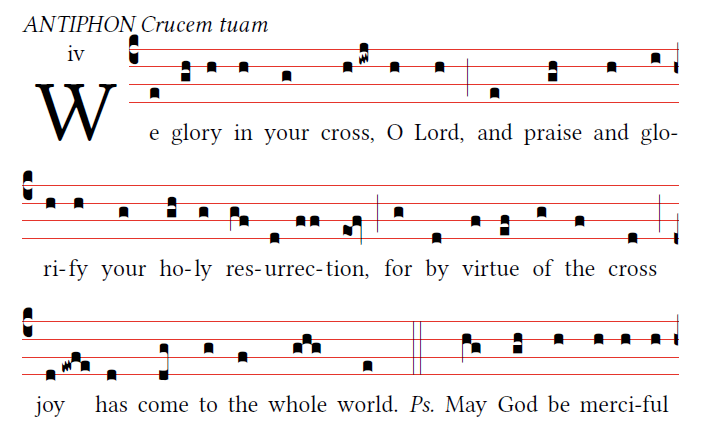
Tonight’s Orison: Antiphon “We glory in your cross, O Lord”
Compline is open to the public. For current restrictions or more information, go to the Compline Choir website.
The Compline Choir at Saint Mark’s Episcopal Cathedral in Seattle presents the Office of Compline live via video livestream and audio broadcast on Classical 98.1 KING-FM. Singers are fully compliant with current health guidance. The Compline Choir is a ministry of the Diocese of Olympia and of Saint Mark’s Episcopal Cathedral. The Compline service is offered every Sunday night at 9:30 PM Pacific Time.
Video livestream feeds:
Livestream at complinechoir.org
Livestream at The Compline Choir Facebook page
Livestream at saintmarks.org
Livestream at St. Mark’s Cathedral Facebook page
Video livestream archive:
(link to the livestream archive on saintmarks.org after the service)
Audio stream feeds:
Live broadcast on KING-FM (Sundays at 9:30 pm PDT)
(link to the podcast on complinepodcast.org when uploaded)
Compline for The Sunday of the Passion: Palm Sunday
The READER begins with a Land Acknowledgment, then a short passage selected from scripture.
LAND ACKNOWLEDGMENT
The Compline Choir and Saint Mark’s Cathedral acknowledge that we gather on the traditional land of the first people of Seattle, the Duwamish People, who are still here, and we honor with gratitude the land itself and the life of all the Coast Salish Tribes.
All we like sheep have gone astray; we have all turned to our own way, and the LORD has laid on him the iniquity of us all. – [Isaiah 53:6]
ORISON: We glory in your cross, O Lord – Plainsong, Mode IV
We glory in your cross, O Lord, and praise and glorify your holy resurrection, for by virtue of the cross joy has come to the whole world. (Ps.) May God be merciful to us and bless us, show us the light of his countenance and come to us.
PREPARATION
READER: The Lord Almighty grant us a quiet night and a perfect end.
CHOIR: Amen.
READER: Beloved in Christ, be sober, be vigilant; because your adversary the devil, as a roaring lion, walketh about, seeking whom he may devour: whom resist, steadfast in the faith. [I Peter 5: 8, 9a]
READER: But thou, O Lord, have mercy upon us.
CHOIR: Thanks be to God.
READER: Our help is in the name of the Lord
CHOIR: who hath made heaven and earth.
CONFESSION AND ABSOLUTION
READER: Let us humbly confess our sins unto Almighty God.
CHOIR: We confess to God Almighty, the Father, the Son, and the Holy Ghost, that we have sinned in thought, word, and deed, through our own grievous fault. Wherefore we pray God to have mercy upon us.
CHOIR: Almighty God, have mercy upon us, forgive us all our sins and deliver us from all evil, confirm and strengthen us in all goodness, and bring us to life everlasting. Through Jesus Christ our Lord. Amen.
READER: May the almighty and merciful Lord grant unto us pardon and remission of all our sins, time for amendment of life, and the grace and comfort of the Holy Spirit.
CHOIR: Amen.
The following is chanted.
CANTOR: O God, make speed to save us;
CHOIR: O Lord, make haste to help us.
CANTOR: Glory be to the Father, and to the Son: and to the Holy Ghost;
CHOIR: As it was in the beginning, is now, and ever shall be: world without end. Amen.
CANTOR: Praise ye the Lord;
CHOIR: The Lord’s name be praiséd.
PSALM 22:1-11 – Plainsong, Tone IV.1
My God, my God, why have you forsaken me? *
and are so far from my cry and from the words of my distress?
O my God, I cry in the daytime, but you do not answer; *
by night as well, but I find no rest.
Yet you are the Holy One, *
enthroned upon the praises of Israel.
Our forefathers put their trust in you; *
they trusted, and you delivered them.
They cried out to you and were delivered; *
they trusted in you and were not put to shame.
But as for me, I am a worm and no man, *
scorned by all and despised by the people.
All who see me laugh me to scorn; *
they curl their lips and wag their heads, saying,
“He trusted in the LORD; let him deliver him; *
let him rescue him, if he delights in him.”
Yet you are he who took me out of the womb, *
and kept me safe upon my mother’s breast.
I have been entrusted to you ever since I was born; *
you were my God when I was still in my mother’s womb.
Be not far from me, for trouble is near, *
and there is none to help.
The READER offers the following lesson:
Even now, says the LORD, return to me with all your heart, with fasting, with weeping, and with mourning; rend your hearts and not your clothing. Return to the LORD, your God, who is gracious and merciful, slow to anger, and abounding in steadfast love. -[Joel 2:12-13 (adapt.)]
CHOIR: Thanks be to God.
The following Respond is chanted (sung in a polyphonic setting on Palm Sunday):
RESPOND: In manus tuas – John Sheppard (c. 1515-1558)
CANTOR: Into thy hands, O Lord, I commend my spirit.
CHOIR: Into thy hands, O Lord, I commend my spirit.
CANTOR: For thou hast redeeméd me, O Lord, thou God of truth;
CHOIR: I commend my spirit.
CANTOR: Glory be to the Father, and to the Son, and to the Holy Ghost;
CHOIR: Into thy hands, O Lord, I commend my spirit.
The READER announces the hymn to be sung.
HYMN: O cross, whose wood is all our race’s boast (Tune: TENTH AVENUE) – Peter R. Hallock (1924-2014)
O Cross whose wood is all our race’s boast, / may God forbid we glory save in thee,
for peace and mercy blossomed on your tree, / a new creation for a world once lost.
Upon your wood, vain pride was crucified: / I to the world as it to me there died.
Now streams flow forth abundant from your side / that cleanse the earth and my soul purify.
Most blissful wood, more fruitful in delight / than that first tree of which we ate and died,
your flower is Christ, the food that springs to life / made everlasting, new and glorified.
So with the psalmist let us all proclaim: / God from the wood victorious shall reign;
and let all choirs of heaven and earth acclaim / the Father, Son, and Holy Spirit’s name.
SHORT RESPOND
CANTOR: Keep me as the apple of an eye;
CHOIR: Hide me under the shadow of thy wings.
NUNC DIMITTIS – Plainsong setting, Tone IV.2
ANTIPHON: Preserve us, O Lord, while waking, and guard us while sleeping;
that awake we may watch with Christ, and asleep we may rest in peace.
Lord, now lettest thou thy servant depart in peace: * according to thy word.
For mine eyes have seen thy salvation. * which thou hast prepared before the face of all people;
To be a light to lighten the Gentiles, * and to be the glory of thy people Israel.
Glory be to the Father, and to the Son, and to the Holy Spirit: *
As it was in the beginning, is now, and will be forever. Amen.
THE APOSTLES CREED
CANTOR: I believe in God,
CHOIR: the Father almighty, maker of heaven and earth; and in Jesus Christ his only Son our Lord; who was conceived by the Holy Ghost, born of the Virgin Mary, suffered under Pontius Pilate, was crucified, dead, and buried. He descended into hell. The third day he rose again from the dead. He ascended into heaven, and sitteth at the right hand of God the Father almighty. From thence he shall come to judge the quick and the dead. I believe in the Holy Ghost, the holy catholic church, the communion of saints, the forgiveness of sins, the resurrection of the body, and the life everlasting. Amen.
THE PRAYERS
CANTOR: Lord, have mercy upon us.
CHOIR: Christ, have mercy upon us.
CANTOR: Lord, have mercy upon us.
The Lord’s Prayer and the following versicles and responses are intoned:
CANTOR: Our Father,
CHOIR: who art in heaven, hallowed be thy name. Thy kingdom come. Thy will be done, on earth as it is in heaven. Give us this day our daily bread, and forgive us our trespasses as we forgive those who trespass against us, and lead us not into temptation, but deliver us from evil. Amen.
CANTOR: Blessed art thou, Lord God of our fathers;
CHOIR: To be praised and glorified above all for ever.
CANTOR: Let us bless the Father, the Son, and the Holy Ghost;
CHOIR: Let us praise him and magnify him for ever.
CANTOR: Blessed art thou, O Lord, in the firmament of heaven;
CHOIR: To be praised and glorified above all for ever.
CANTOR: The Almighty and merciful Lord guard us and give us his blessing.
CHOIR: Amen.
CANTOR: Let us pray.
At least three but not more than five prayers (or collects) are intoned by the CANTOR. The first collect is proper to the day:
THE SUNDAY OF THE PASSION: PALM SUNDAY
Almighty and everliving God, who, of thy tender love towards mankind, hast sent thy Son our Savior Jesus Christ to take upon him our flesh, and to suffer death upon the cross, that all mankind should follow the example of his great humility: Mercifully grant that we may both follow the example of his patience, and also be made partakers of his resurrection; through the same Jesus Christ our Lord, who liveth and reigneth with thee and the Holy Spirit, one God, for ever and ever. Amen.
Other collects offered address the needs and concerns of the choir, or local or global community. The final collect is chosen from the following:
Be present, O merciful God, and protect us through the silent hours of this night, so that we who are wearied by the changes and chances of this fleeting world, may repose upon thy eternal changelessness; through Jesus Christ our Lord.
Or
Visit, we beseech thee, O Lord, this place, and drive from it all the snares of the enemy; let thy holy angels dwell herein to preserve us in peace; and may thy blessing be upon us evermore; through Jesus Christ our Lord.
Or, on The Sunday of the Passion: Palm Sunday,
O Lord Jesus Christ, son of the living God, who at this evening hour didst rest in the sepulchre, and didst thereby sanctify the grave to be a bed of hope to thy people; Make us so to abound in sorrow for our sins, which were the cause of thy passion, that when our bodies lie in the dust, our souls may live with thee; who livest and reignest with the Father and the Holy Ghost, one God world without end.
CHOIR: Amen.
The READER announces the anthem to be sung.
ANTHEM: O vos omnes – Peter R. Hallock
Is it nothing to you, all you who pass by?
Behold and see, if there be any sorrow like unto my sorrow.
Into your hands, Lord, I commend my spirit.
FINAL RESPONSES and BLESSING
The CHOIR sings the final versicles and responses, using a setting composed by Peter Hallock in 1956, the year of the Compline Choir’s founding:
CANTOR: We will lay us down in peace and take our rest:
CHOIR: For it is thou, Lord, only that makest us to dwell in safety.
CANTOR: The Lord be with you:
CHOIR: And with thy spirit.
CANTOR: Let us bless the Lord:
CHOIR: Thanks be to God.
The closing blessing is spoken:
READER: The Almighty and merciful Lord, the Father, the Son, and the Holy Ghost, bless and preserve us.
CHOIR: Amen.
Compline 2024: The Fifth Sunday in Lent
Posted by Ken Peterson in Uncategorized on March 17, 2024
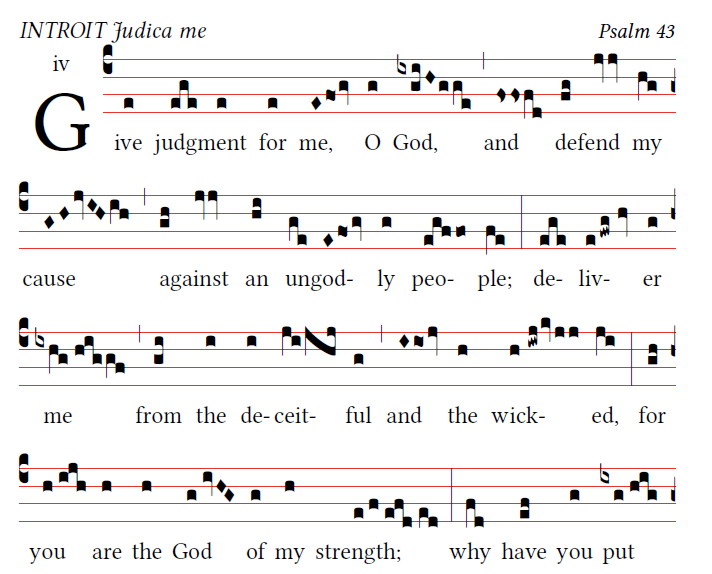
Introit “Judica me,” from The American Gradual.
Compline is open to the public. For current restrictions or more information, go to the Compline Choir website.
The Compline Choir at Saint Mark’s Episcopal Cathedral in Seattle presents the Office of Compline live via video livestream and audio broadcast on Classical 98.1 KING-FM. Singers are fully compliant with current health guidance. The Compline Choir is a ministry of the Diocese of Olympia and of Saint Mark’s Episcopal Cathedral. The Compline service is offered every Sunday night at 9:30 PM Pacific Time.
Video livestream feeds:
Livestream at complinechoir.org
Livestream at The Compline Choir Facebook page
Livestream at saintmarks.org
Livestream at St. Mark’s Cathedral Facebook page
Video livestream archive:
(link to the livestream archive on saintmarks.org after the service)
Audio stream feeds:
Live broadcast on KING-FM (Sundays at 9:30 pm PDT)
(link to the podcast on complinepodcast.org when uploaded)
Compline for The Fifth Sunday in Lent
The READER begins with a Land Acknowledgment, then a short passage selected from scripture.
LAND ACKNOWLEDGMENT
The Compline Choir and Saint Mark’s Cathedral acknowledge that we gather on the traditional land of the first people of Seattle, the Duwamish People, who are still here, and we honor with gratitude the land itself and the life of all the Coast Salish Tribes.
“God so loved the world that he gave his only Son, so that everyone who believes in him may not perish but may have eternal life.” – John 3:16
ORISON: Give judgment for me, O God – Plainsong, Mode IV
Give judgment for me, O God, and defend my cause against an ungodly people; deliver me from the deceitful and the wicked, for you are the God of my strength; (Ps.) Send out your light and your truth, that they may lead me, and bring me to your holy hill and to your dwelling.
PREPARATION
READER: The Lord Almighty grant us a quiet night and a perfect end.
CHOIR: Amen.
READER: Beloved in Christ, be sober, be vigilant; because your adversary the devil, as a roaring lion, walketh about, seeking whom he may devour: whom resist, steadfast in the faith. [I Peter 5: 8, 9a]
READER: But thou, O Lord, have mercy upon us.
CHOIR: Thanks be to God.
READER: Our help is in the name of the Lord
CHOIR: who hath made heaven and earth.
CONFESSION AND ABSOLUTION
READER: Let us humbly confess our sins unto Almighty God.
CHOIR: We confess to God Almighty, the Father, the Son, and the Holy Ghost, that we have sinned in thought, word, and deed, through our own grievous fault. Wherefore we pray God to have mercy upon us.
CHOIR: Almighty God, have mercy upon us, forgive us all our sins and deliver us from all evil, confirm and strengthen us in all goodness, and bring us to life everlasting. Through Jesus Christ our Lord. Amen.
READER: May the almighty and merciful Lord grant unto us pardon and remission of all our sins, time for amendment of life, and the grace and comfort of the Holy Spirit.
CHOIR: Amen.
The following is chanted.
CANTOR: O God, make speed to save us;
CHOIR: O Lord, make haste to help us.
CANTOR: Glory be to the Father, and to the Son: and to the Holy Ghost;
CHOIR: As it was in the beginning, is now, and ever shall be: world without end. Amen.
CANTOR: Praise ye the Lord;
CHOIR: The Lord’s name be praiséd.
PSALM 119:9-16 – Plainsong, Tone II.1
How shall a young man cleanse his way? *
By keeping to your words.
With my whole heart I seek you; *
let me not stray from your commandments.
I treasure your promise in my heart, *
that I may not sin against you.
Blessed are you, O LORD; *
instruct me in your statutes.
With my lips will I recite *
all the judgments of your mouth.
I have taken greater delight in the way of your decrees *
than in all manner of riches.
I will meditate on your commandments *
and give attention to your ways.
My delight is in your statutes; *
I will not forget your word.
Glory to the Father, and to the Son, and to the Holy Spirit. *
As it was in the beginning, is now and will be forever. Amen.
The READER offers the following lesson:
Even now, says the LORD, return to me with all your heart, with fasting, with weeping, and with mourning; rend your hearts and not your clothing. Return to the LORD, your God, who is gracious and merciful, slow to anger, and abounding in steadfast love. -[Joel 2:12-13 (adapt.)]
CHOIR: Thanks be to God.
The following Respond is chanted (sung in a polyphonic setting on Palm Sunday):
CANTOR: Into thy hands, O Lord, I commend my spirit.
CHOIR: Into thy hands, O Lord, I commend my spirit.
CANTOR: For thou hast redeeméd me, O Lord, thou God of truth;
CHOIR: I commend my spirit.
CANTOR: Glory be to the Father, and to the Son, and to the Holy Ghost;
CHOIR: Into thy hands, O Lord, I commend my spirit.
The READER announces the hymn to be sung.
HYMN: Drop, drop, slow tears (Tune: SONG 46) – Orlando Gibbons (1583-1625)
Drop, drop, slow tears,
and bathe those beauteous feet,
which brought from heav’n
the news and Prince of Peace.
Cease not, wet eyes,
his mercies to entreat;
to cry for vengeance
sin doth never cease.
In your deep floods
drown all my faults and fears;
nor let his eye
see sin, but through my tears.
SHORT RESPOND
CANTOR: Keep me as the apple of an eye;
CHOIR: Hide me under the shadow of thy wings.
NUNC DIMITTIS – Plainsong setting, Tone IV.2
ANTIPHON: Preserve us, O Lord, while waking, and guard us while sleeping;
that awake we may watch with Christ, and asleep we may rest in peace.
Lord, now lettest thou thy servant depart in peace: * according to thy word.
For mine eyes have seen thy salvation. * which thou hast prepared before the face of all people;
To be a light to lighten the Gentiles, * and to be the glory of thy people Israel.
Glory be to the Father, and to the Son, and to the Holy Spirit: *
As it was in the beginning, is now, and will be forever. Amen.
THE APOSTLES CREED
CANTOR: I believe in God,
CHOIR: the Father almighty, maker of heaven and earth; and in Jesus Christ his only Son our Lord; who was conceived by the Holy Ghost, born of the Virgin Mary, suffered under Pontius Pilate, was crucified, dead, and buried. He descended into hell. The third day he rose again from the dead. He ascended into heaven, and sitteth at the right hand of God the Father almighty. From thence he shall come to judge the quick and the dead. I believe in the Holy Ghost, the holy catholic church, the communion of saints, the forgiveness of sins, the resurrection of the body, and the life everlasting. Amen.
THE PRAYERS
CANTOR: Lord, have mercy upon us.
CHOIR: Christ, have mercy upon us.
CANTOR: Lord, have mercy upon us.
The Lord’s Prayer and the following versicles and responses are intoned:
CANTOR: Our Father,
CHOIR: who art in heaven, hallowed be thy name. Thy kingdom come. Thy will be done, on earth as it is in heaven. Give us this day our daily bread, and forgive us our trespasses as we forgive those who trespass against us, and lead us not into temptation, but deliver us from evil. Amen.
CANTOR: Blessed art thou, Lord God of our fathers;
CHOIR: To be praised and glorified above all for ever.
CANTOR: Let us bless the Father, the Son, and the Holy Ghost;
CHOIR: Let us praise him and magnify him for ever.
CANTOR: Blessed art thou, O Lord, in the firmament of heaven;
CHOIR: To be praised and glorified above all for ever.
CANTOR: The Almighty and merciful Lord guard us and give us his blessing.
CHOIR: Amen.
CANTOR: Let us pray.
At least three but not more than five prayers (or collects) are intoned by the CANTOR. The first collect is proper to the day:
FIFTH SUNDAY IN LENT
O Almighty God, who alone canst order the unruly wills and affections of sinful men: Grant unto thy people that they may love the thing which thou commandest, and desire that which thou dost promise; that so, among the sundry and manifold changes of the world, our hearts may surely there be fixed where true joys are to be found; through Jesus Christ our Lord, who liveth and reigneth with thee and the Holy Spirit, one God, now and for ever. Amen.
Other collects offered address the needs and concerns of the choir, or local or global community. The final collect is chosen from the following:
Be present, O merciful God, and protect us through the silent hours of this night, so that we who are wearied by the changes and chances of this fleeting world, may repose upon thy eternal changelessness; through Jesus Christ our Lord.
Or
Visit, we beseech thee, O Lord, this place, and drive from it all the snares of the enemy; let thy holy angels dwell herein to preserve us in peace; and may thy blessing be upon us evermore; through Jesus Christ our Lord.
Or, on The Sunday of the Passion: Palm Sunday,
O Lord Jesus Christ, son of the living God, who at this evening hour didst rest in the sepulchre, and didst thereby sanctify the grave to be a bed of hope to thy people; Make us so to abound in sorrow for our sins, which were the cause of thy passion, that when our bodies lie in the dust, our souls may live with thee; who livest and reignest with the Father and the Holy Ghost, one God world without end.
CHOIR: Amen.
The READER announces the anthem to be sung.
ANTHEM: Lamentations of Jeremiah (a5) – Alfonso Ferrabosco the Younger (c. 1575-1628)
[EDITORIAL NOTE: The anthem for this evening is a setting of the Lamentations of Jeremiah by the Elizabethan composer of Italian ancestry, Alfonso Ferrabosco the Younger. The text is the first three verses of Lamentation 1, each of which is indicated by appropriate Hebrew letters: aleph ,beth and ghimel. The scripture is preceded by an introduction, and is concluded by a respond appropriate to various offices sung during the liturgies of Holy Week.]
Here beginneth the Lamentations of the prophet Jeremiah:
Aleph. How lonely sits the city that was full of people! How like a widow has she become, she that was great among the nations!
She that was a princess among the cities has become a vassal.
Beth. She weeps bitterly in the night, tears on her cheeks; among all her lovers she has none to comfort her; all her friends have dealt treacherously with her, they have become her enemies.
Ghimel. Judah has gone into exile because of affliction and hard servitude. She dwells now among the nations but finds no resting place. Her pursuers have all overtaken her in the midst of her distress.
(Refrain) Jerusalem, Jerusalem, turn thee to the Lord thy God.
FINAL RESPONSES and BLESSING
The CHOIR sings the final versicles and responses, using a setting composed by Peter Hallock in 1956, the year of the Compline Choir’s founding:
CANTOR: We will lay us down in peace and take our rest:
CHOIR: For it is thou, Lord, only that makest us to dwell in safety.
CANTOR: The Lord be with you:
CHOIR: And with thy spirit.
CANTOR: Let us bless the Lord:
CHOIR: Thanks be to God.
The closing blessing is spoken:
READER: The Almighty and merciful Lord, the Father, the Son, and the Holy Ghost, bless and preserve us.
CHOIR: Amen.
Compline 2024: The Fourth Sunday in Lent
Posted by Ken Peterson in Uncategorized on March 10, 2024
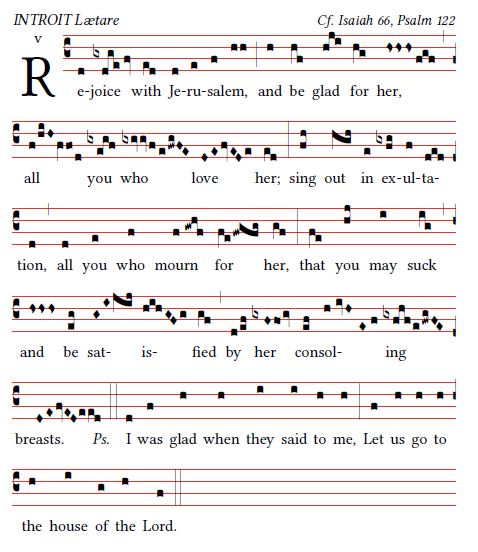
Tonight’s Orison, from the American Gradual
Compline is open to the public. For current restrictions or more information, go to the Compline Choir website.
The Compline Choir at Saint Mark’s Episcopal Cathedral in Seattle presents the Office of Compline live via video livestream and audio broadcast on Classical 98.1 KING-FM. Singers are fully compliant with current health guidance. The Compline Choir is a ministry of the Diocese of Olympia and of Saint Mark’s Episcopal Cathedral. The Compline service is offered every Sunday night at 9:30 PM Pacific Time.
Video livestream feeds:
Livestream at complinechoir.org
Livestream at The Compline Choir Facebook page
Livestream at saintmarks.org
Livestream at St. Mark’s Cathedral Facebook page
Video livestream archive:
(link to the livestream archive on saintmarks.org after the service)
Audio stream feeds:
Live broadcast on KING-FM (Sundays at 9:30 pm PDT)
(link to the podcast on complinepodcast.org when uploaded)
Compline for The Fourth Sunday in Lent
The READER begins with a Land Acknowledgment, then a short passage selected from scripture.
LAND ACKNOWLEDGMENT
The Compline Choir and Saint Mark’s Cathedral acknowledge that we gather on the traditional land of the first people of Seattle, the Duwamish People, who are still here, and we honor with gratitude the land itself and the life of all the Coast Salish Tribes.
“God so loved the world that he gave his only Son, so that everyone who believes in him may not perish but may have eternal life.” – John 3:16
ORISON: Rejoice with Jerusalem– Plainsong, Mode V
Rejoice with Jerusalem, and be glad for her, all you who love her; sing out in exultation, all you who mourn for her, that you may suck and be satisfied by her consoling breasts. (Ps.) I was glad when they said to me, Let us go to the house of the Lord.
PREPARATION
READER: The Lord Almighty grant us a quiet night and a perfect end.
CHOIR: Amen.
READER: Beloved in Christ, be sober, be vigilant; because your adversary the devil, as a roaring lion, walketh about, seeking whom he may devour: whom resist, steadfast in the faith. [I Peter 5: 8, 9a]
READER: But thou, O Lord, have mercy upon us.
CHOIR: Thanks be to God.
READER: Our help is in the name of the Lord
CHOIR: who hath made heaven and earth.
CONFESSION AND ABSOLUTION
READER: Let us humbly confess our sins unto Almighty God.
CHOIR: We confess to God Almighty, the Father, the Son, and the Holy Ghost, that we have sinned in thought, word, and deed, through our own grievous fault. Wherefore we pray God to have mercy upon us.
CHOIR: Almighty God, have mercy upon us, forgive us all our sins and deliver us from all evil, confirm and strengthen us in all goodness, and bring us to life everlasting. Through Jesus Christ our Lord. Amen.
READER: May the almighty and merciful Lord grant unto us pardon and remission of all our sins, time for amendment of life, and the grace and comfort of the Holy Spirit.
CHOIR: Amen.
The following is chanted.
CANTOR: O God, make speed to save us;
CHOIR: O Lord, make haste to help us.
CANTOR: Glory be to the Father, and to the Son: and to the Holy Ghost;
CHOIR: As it was in the beginning, is now, and ever shall be: world without end. Amen.
CANTOR: Praise ye the Lord;
CHOIR: The Lord’s name be praiséd.
PSALM 107:1-3, 17-22 – Plainsong, Tone V.1
Give thanks to the LORD, for he is good, *
and his mercy endures for ever.
Let all those whom the LORD has redeemed proclaim *
that he redeemed them from the hand of the foe.
He gathered them out of the lands; *
from the east and from the west,
from the north and from the south.
Some went down to the sea in ships *
and plied their trade in deep waters;
They beheld the works of the LORD *
and his wonders in the deep.
Then he spoke, and a stormy wind arose, *
which tossed high the waves of the sea.
They mounted up to the heavens and fell back to the depths; *
their hearts melted because of their peril.
They reeled and staggered like drunkards *
and were at their wits’ end.
Then they cried to the LORD in their trouble, *
and he delivered them from their distress.
He stilled the storm to a whisper *
and quieted the waves of the sea.
Then were they glad because of the calm, *
and he brought them to the harbor they were bound for.
Let them give thanks to the LORD for his mercy *
and the wonders he does for his children.
Let them exalt him in the congregation of the people *
and praise him in the council of the elders.
Glory to the Father, and to the Son, and to the Holy Spirit. *
As it was in the beginning, is now and will be forever. Amen.
The READER offers the following lesson:
Even now, says the LORD, return to me with all your heart, with fasting, with weeping, and with mourning; rend your hearts and not your clothing. Return to the LORD, your God, who is gracious and merciful, slow to anger, and abounding in steadfast love. -[Joel 2:12-13 (adapt.)]
CHOIR: Thanks be to God.
The following Respond is chanted (sung in a polyphonic setting on Palm Sunday):
CANTOR: Into thy hands, O Lord, I commend my spirit.
CHOIR: Into thy hands, O Lord, I commend my spirit.
CANTOR: For thou hast redeeméd me, O Lord, thou God of truth;
CHOIR: I commend my spirit.
CANTOR: Glory be to the Father, and to the Son, and to the Holy Ghost;
CHOIR: Into thy hands, O Lord, I commend my spirit.
The READER announces the hymn to be sung.
HYMN: Lord, keep us steadfast in your Word (Tune: JESU DULCEDO CORDIUM) – Plainsong, Mode II; ed. Carl C. Crosier (1945-2014); harm. Peter R. Hallock (1924-2014
Lord, keep us steadfast in your Word;
curb those who by deceit or sword
would wrench the kingdom of your Son
and bring to nought all he has done.
Lord Jesus Christ, your pow’r make known,
for you are Lord of lords alone;
defend your holy Church that we
may sing your praise eternally.
O Comforter of priceless worth,
send peace and unity on earth;
support us in our final strife
and lead us out of death to life.
SHORT RESPOND
CANTOR: Keep me as the apple of an eye;
CHOIR: Hide me under the shadow of thy wings.
NUNC DIMITTIS – Plainsong setting, Tone IV.2
ANTIPHON: Preserve us, O Lord, while waking, and guard us while sleeping;
that awake we may watch with Christ, and asleep we may rest in peace.
Lord, now lettest thou thy servant depart in peace: * according to thy word.
For mine eyes have seen thy salvation. * which thou hast prepared before the face of all people;
To be a light to lighten the Gentiles, * and to be the glory of thy people Israel.
Glory be to the Father, and to the Son, and to the Holy Spirit: *
As it was in the beginning, is now, and will be forever. Amen.
THE APOSTLES CREED
CANTOR: I believe in God,
CHOIR: the Father almighty, maker of heaven and earth; and in Jesus Christ his only Son our Lord; who was conceived by the Holy Ghost, born of the Virgin Mary, suffered under Pontius Pilate, was crucified, dead, and buried. He descended into hell. The third day he rose again from the dead. He ascended into heaven, and sitteth at the right hand of God the Father almighty. From thence he shall come to judge the quick and the dead. I believe in the Holy Ghost, the holy catholic church, the communion of saints, the forgiveness of sins, the resurrection of the body, and the life everlasting. Amen.
THE PRAYERS
CANTOR: Lord, have mercy upon us.
CHOIR: Christ, have mercy upon us.
CANTOR: Lord, have mercy upon us.
The Lord’s Prayer and the following versicles and responses are intoned:
CANTOR: Our Father,
CHOIR: who art in heaven, hallowed be thy name. Thy kingdom come. Thy will be done, on earth as it is in heaven. Give us this day our daily bread, and forgive us our trespasses as we forgive those who trespass against us, and lead us not into temptation, but deliver us from evil. Amen.
CANTOR: Blessed art thou, Lord God of our fathers;
CHOIR: To be praised and glorified above all for ever.
CANTOR: Let us bless the Father, the Son, and the Holy Ghost;
CHOIR: Let us praise him and magnify him for ever.
CANTOR: Blessed art thou, O Lord, in the firmament of heaven;
CHOIR: To be praised and glorified above all for ever.
CANTOR: The Almighty and merciful Lord guard us and give us his blessing.
CHOIR: Amen.
CANTOR: Let us pray.
At least three but not more than five prayers (or collects) are intoned by the CANTOR. The first collect is proper to the day:
FOURTH SUNDAY IN LENT
Gracious Father, whose blessed Son Jesus Christ came down from heaven to be the true bread which giveth life to the world: Evermore give us this bread, that he may live in us, and we in him; who liveth and reigneth with thee and the Holy Spirit, one God, now and for ever. Amen.
Other collects offered address the needs and concerns of the choir, or local or global community. The final collect is chosen from the following:
Be present, O merciful God, and protect us through the silent hours of this night, so that we who are wearied by the changes and chances of this fleeting world, may repose upon thy eternal changelessness; through Jesus Christ our Lord.
Or
Visit, we beseech thee, O Lord, this place, and drive from it all the snares of the enemy; let thy holy angels dwell herein to preserve us in peace; and may thy blessing be upon us evermore; through Jesus Christ our Lord.
Or, on The Sunday of the Passion: Palm Sunday,
O Lord Jesus Christ, son of the living God, who at this evening hour didst rest in the sepulchre, and didst thereby sanctify the grave to be a bed of hope to thy people; Make us so to abound in sorrow for our sins, which were the cause of thy passion, that when our bodies lie in the dust, our souls may live with thee; who livest and reignest with the Father and the Holy Ghost, one God world without end.
CHOIR: Amen.
The READER announces the anthem to be sung.
ANTHEM: Of the Lord’s mercies – Erin Aas (b. 1974)
From a lamentation of the prophet Jeremiah:
It is of the Lord’s mercies that we are not consumed, because his compassions fail not. They are new every morning: great is thy faithfulness. The Lord is my portion, saith my soul; therefore will I hope in him. The Lord is good unto them that wait for him, to the soul that seeketh him. It is good that a man should both hope and quietly wait for the salvation of the Lord.
Jerusalem, Jerusalem, turn thee to the Lord thy God.
FINAL RESPONSES and BLESSING
The CHOIR sings the final versicles and responses, using a setting composed by Peter Hallock in 1956, the year of the Compline Choir’s founding:
CANTOR: We will lay us down in peace and take our rest:
CHOIR: For it is thou, Lord, only that makest us to dwell in safety.
CANTOR: The Lord be with you:
CHOIR: And with thy spirit.
CANTOR: Let us bless the Lord:
CHOIR: Thanks be to God.
The closing blessing is spoken:
READER: The Almighty and merciful Lord, the Father, the Son, and the Holy Ghost, bless and preserve us.
CHOIR: Amen.
Compline 2024: The Third Sunday in Lent
Posted by Ken Peterson in Uncategorized on March 2, 2024
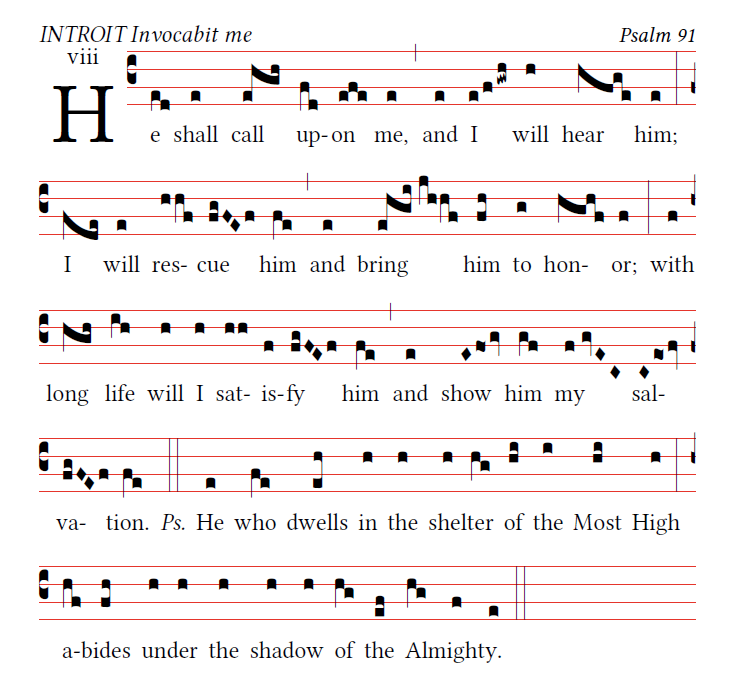
Chant Introit “Invocabit me” (“He shall call upon me”)
Compline is open to the public. For current restrictions or more information, go to the Compline Choir website.
The Compline Choir at Saint Mark’s Episcopal Cathedral in Seattle presents the Office of Compline live via video livestream and audio broadcast on Classical 98.1 KING-FM. Singers are fully compliant with current health guidance. The Compline Choir is a ministry of the Diocese of Olympia and of Saint Mark’s Episcopal Cathedral. The Compline service is offered every Sunday night at 9:30 PM Pacific Time.
Video livestream feeds:
Livestream at complinechoir.org
Livestream at The Compline Choir Facebook page
Livestream at saintmarks.org
Livestream at St. Mark’s Cathedral Facebook page
Video livestream archive:
(link to the livestream archive on saintmarks.org after the service)
Audio stream feeds:
Live broadcast on KING-FM (Sundays at 9:30 pm PDT)
(link to the podcast on complinepodcast.org when uploaded)
Compline for The Third Sunday in Lent
The READER begins with a Land Acknowledgment, then a short passage selected from scripture.
LAND ACKNOWLEDGMENT
The Compline Choir and Saint Mark’s Cathedral acknowledge that we gather on the traditional land of the first people of Seattle, the Duwamish People, who are still here, and we honor with gratitude the land itself and the life of all the Coast Salish Tribes.
Jesus called the crowd with his disciples and said to them, “If any wish to come after me, let them deny themselves and take up their cross and follow me. For those who want to save their life will lose it, and those who lose their life for my sake, and for the sake of the gospel, will save it.”
– [Mark 8:34, 35]
ORISON: He shall call upon me – Plainsong, Mode VIII
He shall call upon me, and I will hear him; I will rescue him and bring him to honor; with long life will I satisfy him and show him my salvation. [vs.] He who dwells in the shelter of the Most High abides under the shadow of the Almighty.
PREPARATION
READER: The Lord Almighty grant us a quiet night and a perfect end.
CHOIR: Amen.
READER: Beloved in Christ, be sober, be vigilant; because your adversary the devil, as a roaring lion, walketh about, seeking whom he may devour: whom resist, steadfast in the faith. [I Peter 5: 8, 9a]
READER: But thou, O Lord, have mercy upon us.
CHOIR: Thanks be to God.
READER: Our help is in the name of the Lord
CHOIR: who hath made heaven and earth.
CONFESSION AND ABSOLUTION
READER: Let us humbly confess our sins unto Almighty God.
CHOIR: We confess to God Almighty, the Father, the Son, and the Holy Ghost, that we have sinned in thought, word, and deed, through our own grievous fault. Wherefore we pray God to have mercy upon us.
CHOIR: Almighty God, have mercy upon us, forgive us all our sins and deliver us from all evil, confirm and strengthen us in all goodness, and bring us to life everlasting. Through Jesus Christ our Lord. Amen.
READER: May the almighty and merciful Lord grant unto us pardon and remission of all our sins, time for amendment of life, and the grace and comfort of the Holy Spirit.
CHOIR: Amen.
The following is chanted.
CANTOR: O God, make speed to save us;
CHOIR: O Lord, make haste to help us.
CANTOR: Glory be to the Father, and to the Son: and to the Holy Ghost;
CHOIR: As it was in the beginning, is now, and ever shall be: world without end. Amen.
CANTOR: Praise ye the Lord;
CHOIR: The Lord’s name be praiséd.
PSALM 19 – Plainsong, Tone III.4
The heavens declare the glory of God, *
and the firmament shows his handiwork.
One day tells its tale to another, *
and one night imparts knowledge to another.
Although they have no words or language, *
and their voices are not heard,
Their sound has gone out into all lands, *
and their message to the ends of the world.
In the deep has he set a pavilion for the sun; *
it comes forth like a bridegroom out of his chamber;
it rejoices like a champion to run its course.
It goes forth from the uttermost edge of the heavens
and runs about to the end of it again; *
nothing is hidden from its burning heat.
The law of the LORD is perfect and revives the soul; *
the testimony of the LORD is sure and gives wisdom to the innocent.
The statutes of the LORD are just and rejoice the heart; *
the commandment of the LORD is clear and gives light to the eyes.
The fear of the LORD is clean and endures for ever; *
the judgments of the LORD are true and righteous altogether.
More to be desired are they than gold, more than much fine gold, *
sweeter far than honey, than honey in the comb.
By them also is your servant enlightened, *
and in keeping them there is great reward.
Who can tell how often he offends? *
cleanse me from my secret faults.
Above all, keep your servant from presumptuous sins;
let them not get dominion over me; *
then shall I be whole and sound, and innocent of a great offense.
Let the words of my mouth and the meditation of my
heart be acceptable in your sight, *
O LORD, my strength and my redeemer.
Glory to the Father, and to the Son, and to the Holy Spirit:
As it was in the beginning, is now, and will be for ever. Amen.
The READER offers the following lesson:
Even now, says the LORD, return to me with all your heart, with fasting, with weeping, and with mourning; rend your hearts and not your clothing. Return to the LORD, your God, who is gracious and merciful, slow to anger, and abounding in steadfast love. -[Joel 2:12-13 (adapt.)]
CHOIR: Thanks be to God.
The following Respond is chanted (sung in a polyphonic setting on Palm Sunday):
CANTOR: Into thy hands, O Lord, I commend my spirit.
CHOIR: Into thy hands, O Lord, I commend my spirit.
CANTOR: For thou hast redeeméd me, O Lord, thou God of truth;
CHOIR: I commend my spirit.
CANTOR: Glory be to the Father, and to the Son, and to the Holy Ghost;
CHOIR: Into thy hands, O Lord, I commend my spirit.
The READER announces the hymn to be sung.
OFFICE HYMN: ‘Christe, qui lux es et dies,’ from Music for Compline – Plainsong, Mode II; arr. Kevin Siegfried (b. 1969)
Christe qui lux es et dies, Noctis tenebras detegis,
Lucisque lumen crederis, Lumen beatum praedicans.
All holy Lord we pray to thee, Keep us tonight from danger free;
Grant us, dear Lord, in thee to rest, So be our sleep in quiet blest.
Ne gravis somnus irruat, Nec hostis nos surripiat,
Nec caro illi consentiens, Nos tibi reos statuat.
And while the eyes soft slumber take, Still be the heart to thee awake;
Be thy right hand upheld above Thy servants resting in thy love.
Defensor noster aspice, Insidiantes reprime,
Guberna tuos famulos, Quos sanguine mercatus es.
Remember us, dear lord, we pray While in this mortal flesh we stay:
‘Tis thou who dost the soul defend, Be present with us to the end.
Deo Patri sit gloria, Eiusque soli Filio,
Sancto simul cum Spiritu, Nunc et per omne saeculum. Amen.
SHORT RESPOND
CANTOR: Keep me as the apple of an eye;
CHOIR: Hide me under the shadow of thy wings.
NUNC DIMITTIS – Plainsong setting, Tone IV.2
ANTIPHON: Preserve us, O Lord, while waking, and guard us while sleeping;
that awake we may watch with Christ, and asleep we may rest in peace.
Lord, now lettest thou thy servant depart in peace: * according to thy word.
For mine eyes have seen thy salvation. * which thou hast prepared before the face of all people;
To be a light to lighten the Gentiles, * and to be the glory of thy people Israel.
Glory be to the Father, and to the Son, and to the Holy Spirit: *
As it was in the beginning, is now, and will be forever. Amen.
THE APOSTLES CREED
CANTOR: I believe in God,
CHOIR: the Father almighty, maker of heaven and earth; and in Jesus Christ his only Son our Lord; who was conceived by the Holy Ghost, born of the Virgin Mary, suffered under Pontius Pilate, was crucified, dead, and buried. He descended into hell. The third day he rose again from the dead. He ascended into heaven, and sitteth at the right hand of God the Father almighty. From thence he shall come to judge the quick and the dead. I believe in the Holy Ghost, the holy catholic church, the communion of saints, the forgiveness of sins, the resurrection of the body, and the life everlasting. Amen.
THE PRAYERS
CANTOR: Lord, have mercy upon us.
CHOIR: Christ, have mercy upon us.
CANTOR: Lord, have mercy upon us.
The Lord’s Prayer and the following versicles and responses are intoned:
CANTOR: Our Father,
CHOIR: who art in heaven, hallowed be thy name. Thy kingdom come. Thy will be done, on earth as it is in heaven. Give us this day our daily bread, and forgive us our trespasses as we forgive those who trespass against us, and lead us not into temptation, but deliver us from evil. Amen.
CANTOR: Blessed art thou, Lord God of our fathers;
CHOIR: To be praised and glorified above all for ever.
CANTOR: Let us bless the Father, the Son, and the Holy Ghost;
CHOIR: Let us praise him and magnify him for ever.
CANTOR: Blessed art thou, O Lord, in the firmament of heaven;
CHOIR: To be praised and glorified above all for ever.
CANTOR: The Almighty and merciful Lord guard us and give us his blessing.
CHOIR: Amen.
CANTOR: Let us pray.
At least three but not more than five prayers (or collects) are intoned by the CANTOR. The first collect is proper to the day:
THIRD SUNDAY IN LENT
Almighty God, who seest that we have no power of ourselves to help ourselves: Keep us both outwardly in our bodies and inwardly in our souls, that we may be defended from all adversities which may happen to the body, and from all evil thoughts which may assault and hurt the soul; through Jesus Christ our Lord, who liveth and reigneth with thee and the Holy Spirit, one God, for ever and ever. Amen.
Other collects offered address the needs and concerns of the choir, or local or global community. The final collect is chosen from the following:
Be present, O merciful God, and protect us through the silent hours of this night, so that we who are wearied by the changes and chances of this fleeting world, may repose upon thy eternal changelessness; through Jesus Christ our Lord.
Or
Visit, we beseech thee, O Lord, this place, and drive from it all the snares of the enemy; let thy holy angels dwell herein to preserve us in peace; and may thy blessing be upon us evermore; through Jesus Christ our Lord.
Or, on The Sunday of the Passion: Palm Sunday,
O Lord Jesus Christ, son of the living God, who at this evening hour didst rest in the sepulchre, and didst thereby sanctify the grave to be a bed of hope to thy people; Make us so to abound in sorrow for our sins, which were the cause of thy passion, that when our bodies lie in the dust, our souls may live with thee; who livest and reignest with the Father and the Holy Ghost, one God world without end.
CHOIR: Amen.
The READER announces the anthem to be sung.
ANTHEM: Lamentations (Setting I) – Thomas Tallis (c. 1505-1585)
Here beginneth the Lamentations of the prophet Jeremiah:
Aleph. How lonely sits the city that was full of people! How like a widow has she become, she that was great among the nations! She that was a princess among the cities has become a vassal.
Beth. She weeps bitterly in the night, tears on her cheeks; among all her lovers she has none to comfort her; all her friends have dealt treacherously with her, they have become her enemies.
(Refrain) Jerusalem, Jerusalem, turn thee to the Lord thy God.
FINAL RESPONSES and BLESSING
The CHOIR sings the final versicles and responses, using a setting composed by Peter Hallock in 1956, the year of the Compline Choir’s founding:
CANTOR: We will lay us down in peace and take our rest:
CHOIR: For it is thou, Lord, only that makest us to dwell in safety.
CANTOR: The Lord be with you:
CHOIR: And with thy spirit.
CANTOR: Let us bless the Lord:
CHOIR: Thanks be to God.
The closing blessing is spoken:
READER: The Almighty and merciful Lord, the Father, the Son, and the Holy Ghost, bless and preserve us.
CHOIR: Amen.
Compline 2024: The Second Sunday in Lent
Posted by Ken Peterson in Uncategorized on February 25, 2024
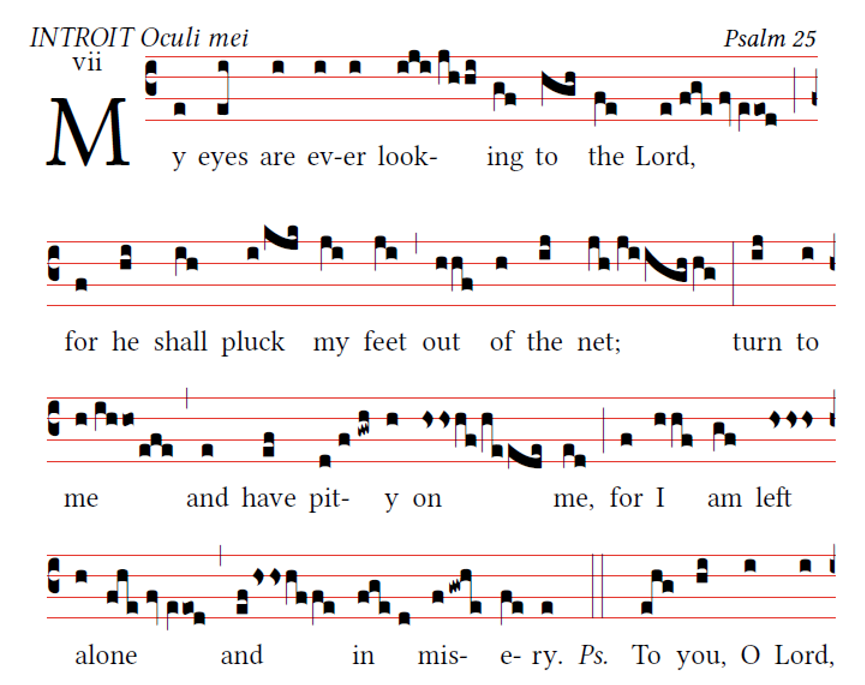
Tonight’s ORISON – chant, “Oculi mei”
Compline is open to the public. For current restrictions or more information, go to the Compline Choir website.
The Compline Choir at Saint Mark’s Episcopal Cathedral in Seattle presents the Office of Compline live via video livestream and audio broadcast on Classical 98.1 KING-FM. Singers are fully compliant with current health guidance. The Compline Choir is a ministry of the Diocese of Olympia and of Saint Mark’s Episcopal Cathedral. The Compline service is offered every Sunday night at 9:30 PM Pacific Time.
Video livestream feeds:
Livestream at complinechoir.org
Livestream at The Compline Choir Facebook page
Livestream at saintmarks.org
Livestream at St. Mark’s Cathedral Facebook page
Video livestream archive:
(link to the livestream archive on saintmarks.org after the service)
Audio stream feeds:
Live broadcast on KING-FM (Sundays at 9:30 pm PDT)
(link to the podcast on complinepodcast.org when uploaded)
Compline for The Second Sunday in Lent
The READER begins with a Land Acknowledgment, then a short passage selected from scripture.
LAND ACKNOWLEDGMENT
The Compline Choir and Saint Mark’s Cathedral acknowledge that we gather on the traditional land of the first people of Seattle, the Duwamish People, who are still here, and we honor with gratitude the land itself and the life of all the Coast Salish Tribes.
Jesus called the crowd with his disciples and said to them, “If any wish to come after me, let them deny themselves and take up their cross and follow me. For those who want to save their life will lose it, and those who lose their life for my sake, and for the sake of the gospel, will save it.”
– [Mark 8:34, 35]
ORISON: My eyes are ever looking to the Lord – Plainsong, Mode VI
My eyes are ever looking to the Lord, for he shall pluck my feet out of the net; turn to me and have pity on me, for I am left alone and in misery. [vs.] To you , O Lord, I lift up my soul; my God, I put my trust in you; let me not be humiliated, nor let my enemies triumph over me.
PREPARATION
READER: The Lord Almighty grant us a quiet night and a perfect end.
CHOIR: Amen.
READER: Beloved in Christ, be sober, be vigilant; because your adversary the devil, as a roaring lion, walketh about, seeking whom he may devour: whom resist, steadfast in the faith. [I Peter 5: 8, 9a]
READER: But thou, O Lord, have mercy upon us.
CHOIR: Thanks be to God.
READER: Our help is in the name of the Lord
CHOIR: who hath made heaven and earth.
CONFESSION AND ABSOLUTION
READER: Let us humbly confess our sins unto Almighty God.
CHOIR: We confess to God Almighty, the Father, the Son, and the Holy Ghost, that we have sinned in thought, word, and deed, through our own grievous fault. Wherefore we pray God to have mercy upon us.
CHOIR: Almighty God, have mercy upon us, forgive us all our sins and deliver us from all evil, confirm and strengthen us in all goodness, and bring us to life everlasting. Through Jesus Christ our Lord. Amen.
READER: May the almighty and merciful Lord grant unto us pardon and remission of all our sins, time for amendment of life, and the grace and comfort of the Holy Spirit.
CHOIR: Amen.
The following is chanted.
CANTOR: O God, make speed to save us;
CHOIR: O Lord, make haste to help us.
CANTOR: Glory be to the Father, and to the Son: and to the Holy Ghost;
CHOIR: As it was in the beginning, is now, and ever shall be: world without end. Amen.
CANTOR: Praise ye the Lord;
CHOIR: The Lord’s name be praiséd.
PSALM 22:22-30 – Plainsong, Tone II.1
[ANTIPHON:] Those who seek the LORD shall praise him.
Praise the LORD, you that fear him; *
stand in awe of him, O offspring of Israel;
all you of Jacob’s line, give glory.
For he does not despise nor abhor the poor in their poverty;
neither does he hide his face from them; *
but when they cry to him he hears them.
My praise is of him in the great assembly; *
I will perform my vows in the presence of those who worship him.
The poor shall eat and be satisfied,
and those who seek the LORD shall praise him: *
“May your heart live for ever!”
All the ends of the earth shall remember and turn to the LORD, *
and all the families of the nations bow before him.
For kingship belongs to the LORD; *
he rules over the nations.
To him alone all who sleep in the earth bow down in worship; *
all who go down to the dust fall before him.
My soul shall live for him;
my descendants shall serve him; *
they shall be known as the LORD’S for ever.
They shall come and make known to a people yet unborn *
the saving deeds that he has done.
Glory to the Father, and to the Son, and to the Holy Spirit: *
as it was in the beginning, is now, and will be forever. Amen.
[ANTIPHON:] Those who seek the LORD shall praise him.
The READER offers the following lesson:
Even now, says the LORD, return to me with all your heart, with fasting, with weeping, and with mourning; rend your hearts and not your clothing. Return to the LORD, your God, who is gracious and merciful, slow to anger, and abounding in steadfast love. -[Joel 2:12-13 (adapt.)]
CHOIR: Thanks be to God.
The following Respond is chanted (sung in a polyphonic setting on Palm Sunday):
CANTOR: Into thy hands, O Lord, I commend my spirit.
CHOIR: Into thy hands, O Lord, I commend my spirit.
CANTOR: For thou hast redeeméd me, O Lord, thou God of truth;
CHOIR: I commend my spirit.
CANTOR: Glory be to the Father, and to the Son, and to the Holy Ghost;
CHOIR: Into thy hands, O Lord, I commend my spirit.
The READER announces the hymn to be sung.
HYMN: Lord Jesus, think on me (Tune: SOUTHWELL) – from Daman’s Psalter, 1579; adapt. Hymnal 1940; fauxbourdon harm. by Peter R. Hallock (1924-2014)
Lord Jesus, think on me,
and purge away my sin;
from earth-born passions set me free,
and make me pure within.
Lord Jesus, think on me,
with care and woe oppressed;
let me Thy loving servant be,
and taste Thy promised rest.
Lord Jesus, think on me,
nor let me go astray;
through darkness and perplexity
point Thou the heav’nly way.
Lord Jesus, think on me,
that, when the flood is past,
I may eternal brightness see,
and share Thy joy at last.
SHORT RESPOND
CANTOR: Keep me as the apple of an eye;
CHOIR: Hide me under the shadow of thy wings.
NUNC DIMITTIS – Plainsong setting, Tone IV.2
ANTIPHON: Preserve us, O Lord, while waking, and guard us while sleeping;
that awake we may watch with Christ, and asleep we may rest in peace.
Lord, now lettest thou thy servant depart in peace: * according to thy word.
For mine eyes have seen thy salvation. * which thou hast prepared before the face of all people;
To be a light to lighten the Gentiles, * and to be the glory of thy people Israel.
Glory be to the Father, and to the Son, and to the Holy Spirit: *
As it was in the beginning, is now, and will be forever. Amen.
THE APOSTLES CREED
CANTOR: I believe in God,
CHOIR: the Father almighty, maker of heaven and earth; and in Jesus Christ his only Son our Lord; who was conceived by the Holy Ghost, born of the Virgin Mary, suffered under Pontius Pilate, was crucified, dead, and buried. He descended into hell. The third day he rose again from the dead. He ascended into heaven, and sitteth at the right hand of God the Father almighty. From thence he shall come to judge the quick and the dead. I believe in the Holy Ghost, the holy catholic church, the communion of saints, the forgiveness of sins, the resurrection of the body, and the life everlasting. Amen.
THE PRAYERS
CANTOR: Lord, have mercy upon us.
CHOIR: Christ, have mercy upon us.
CANTOR: Lord, have mercy upon us.
The Lord’s Prayer and the following versicles and responses are intoned:
CANTOR: Our Father,
CHOIR: who art in heaven, hallowed be thy name. Thy kingdom come. Thy will be done, on earth as it is in heaven. Give us this day our daily bread, and forgive us our trespasses as we forgive those who trespass against us, and lead us not into temptation, but deliver us from evil. Amen.
CANTOR: Blessed art thou, Lord God of our fathers;
CHOIR: To be praised and glorified above all for ever.
CANTOR: Let us bless the Father, the Son, and the Holy Ghost;
CHOIR: Let us praise him and magnify him for ever.
CANTOR: Blessed art thou, O Lord, in the firmament of heaven;
CHOIR: To be praised and glorified above all for ever.
CANTOR: The Almighty and merciful Lord guard us and give us his blessing.
CHOIR: Amen.
CANTOR: Let us pray.
At least three but not more than five prayers (or collects) are intoned by the CANTOR. The first collect is proper to the day:
THE SECOND SUNDAY IN LENT
O God, whose glory it is always to have mercy: Be gracious to all who have gone astray from thy ways, and bring them
again with penitent hearts and steadfast faith to embrace and hold fast the unchangeable truth of thy Word, Jesus Christ
thy Son; who with thee and the Holy Spirit liveth and reigneth, one God, for ever and ever. Amen.
Other collects offered address the needs and concerns of the choir, or local or global community. The final collect is chosen from the following:
Be present, O merciful God, and protect us through the silent hours of this night, so that we who are wearied by the changes and chances of this fleeting world, may repose upon thy eternal changelessness; through Jesus Christ our Lord.
Or
Visit, we beseech thee, O Lord, this place, and drive from it all the snares of the enemy; let thy holy angels dwell herein to preserve us in peace; and may thy blessing be upon us evermore; through Jesus Christ our Lord.
Or, on The Sunday of the Passion: Palm Sunday,
O Lord Jesus Christ, son of the living God, who at this evening hour didst rest in the sepulchre, and didst thereby sanctify the grave to be a bed of hope to thy people; Make us so to abound in sorrow for our sins, which were the cause of thy passion, that when our bodies lie in the dust, our souls may live with thee; who livest and reignest with the Father and the Holy Ghost, one God world without end.
CHOIR: Amen.
The READER announces the anthem to be sung.
ANTHEM: Lamentations – Peter R. Hallock (1924-2014)
Here begins the Lamentation of Jeremiah the Prophet.
How deserted lies the city once so full of people: how like a widow
she is, who once was great among the nations, and princess
among the provinces, how is she become tributary.
Bitterly she weeps in the night, and tears are upon her cheeks:
Among all her lovers there is none to comfort her.
All of her friends have betrayed her; they have become her enemies.
Jerusalem, Jerusalem, return to the Lord your God.
FINAL RESPONSES and BLESSING
The CHOIR sings the final versicles and responses, using a setting composed by Peter Hallock in 1956, the year of the Compline Choir’s founding:
CANTOR: We will lay us down in peace and take our rest:
CHOIR: For it is thou, Lord, only that makest us to dwell in safety.
CANTOR: The Lord be with you:
CHOIR: And with thy spirit.
CANTOR: Let us bless the Lord:
CHOIR: Thanks be to God.
The closing blessing is spoken:
READER: The Almighty and merciful Lord, the Father, the Son, and the Holy Ghost, bless and preserve us.
CHOIR: Amen.
Compline 2024: The First Sunday in Lent
Posted by Ken Peterson in Uncategorized on February 17, 2024
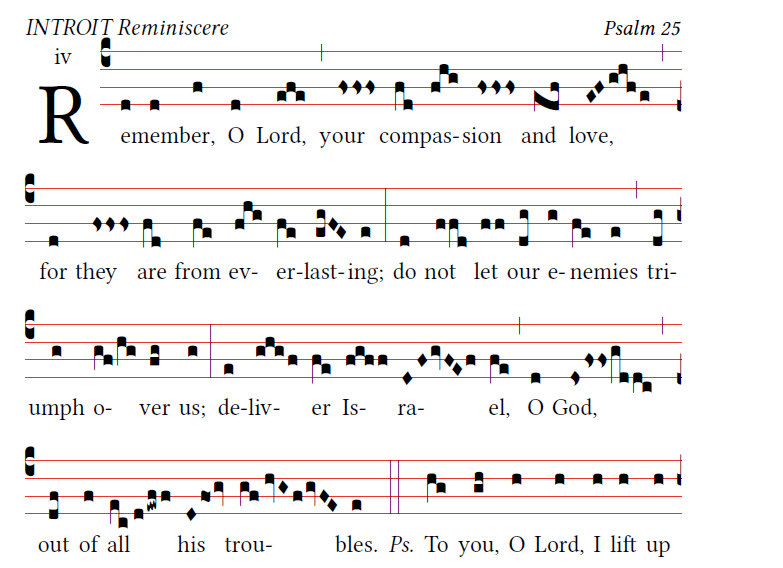
Tonight’s Orison: the chant Reminiscere sung in English from the New American Gradual
Compline is open to the public. For current restrictions or more information, go to the Compline Choir website.
The Compline Choir at Saint Mark’s Episcopal Cathedral in Seattle presents the Office of Compline live via video livestream and audio broadcast on Classical 98.1 KING-FM. Singers are fully compliant with current health guidance. The Compline Choir is a ministry of the Diocese of Olympia and of Saint Mark’s Episcopal Cathedral. The Compline service is offered every Sunday night at 9:30 PM Pacific Time.
Video livestream feeds:
Livestream at complinechoir.org
Livestream at The Compline Choir Facebook page
Livestream at saintmarks.org
Livestream at St. Mark’s Cathedral Facebook page
Video livestream archive:
(link to the livestream archive on saintmarks.org after the service)
Audio stream feeds:
Live broadcast on KING-FM (Sundays at 9:30 pm PDT)
(link to the podcast on complinepodcast.org when uploaded)
Compline for The First Sunday in Lent
The READER begins with a Land Acknowledgment, then a short passage selected from scripture.
LAND ACKNOWLEDGMENT
The Compline Choir and Saint Mark’s Cathedral acknowledge that we gather on the traditional land of the first people of Seattle, the Duwamish People, who are still here, and we honor with gratitude the land itself and the life of all the Coast Salish Tribes.
After Jesus was baptized by John, the Spirit immediately drove him out into the wilderness. He was in the wilderness forty days, tested by Satan, and he was with the wild beasts, and the angels waited on him.
– [Mark 1:9, 11-13]
ORISON: Remember, O Lord – Plainsong, Tone IV [American Gradual]
Hearken, O Lord, unto my voice which has called out to you; deign to be my help, forsake me not, do not despise me, O God my Savior. [vs.] The Lord is my light and my salvation; whom shall I fear?
PREPARATION
READER: The Lord Almighty grant us a quiet night and a perfect end.
CHOIR: Amen.
READER: Beloved in Christ, be sober, be vigilant; because your adversary the devil, as a roaring lion, walketh about, seeking whom he may devour: whom resist, steadfast in the faith. [I Peter 5: 8, 9a]
READER: But thou, O Lord, have mercy upon us.
CHOIR: Thanks be to God.
READER: Our help is in the name of the Lord
CHOIR: who hath made heaven and earth.
CONFESSION AND ABSOLUTION
READER: Let us humbly confess our sins unto Almighty God.
CHOIR: We confess to God Almighty, the Father, the Son, and the Holy Ghost, that we have sinned in thought, word, and deed, through our own grievous fault. Wherefore we pray God to have mercy upon us.
CHOIR: Almighty God, have mercy upon us, forgive us all our sins and deliver us from all evil, confirm and strengthen us in all goodness, and bring us to life everlasting. Through Jesus Christ our Lord. Amen.
READER: May the almighty and merciful Lord grant unto us pardon and remission of all our sins, time for amendment of life, and the grace and comfort of the Holy Spirit.
CHOIR: Amen.
The following is chanted.
CANTOR: O God, make speed to save us;
CHOIR: O Lord, make haste to help us.
CANTOR: Glory be to the Father, and to the Son: and to the Holy Ghost;
CHOIR: As it was in the beginning, is now, and ever shall be: world without end. Amen.
CANTOR: Praise ye the Lord;
CHOIR: The Lord’s name be praiséd.
PSALM 25:1-9 – Plainsong, Tone IV.2
To you, O LORD, I lift up my soul; my God, I put my trust in you; *
let me not be humiliated, nor let my enemies triumph over me.
Let none who look to you be put to shame; *
let the treacherous be disappointed in their schemes.
Show me your ways, O LORD, *
and teach me your paths.
Lead me in your truth and teach me, *
for you are the God of my salvation; in you have I trusted all the day long.
Remember, O LORD, your compassion and love, *
for they are from everlasting.
Remember not the sins of my youth and my transgressions; *
remember me according to your love and for the sake of your goodness, O LORD.
Gracious and upright is the LORD; *
therefore he teaches sinners in his way.
He guides the humble in doing right *
and teaches his way to the lowly.
All the paths of the LORD are love and faithfulness *
to those who keep his covenant and his testimonies.
Glory to the Father, and to the Son, and to the Holy Spirit: *
as it was in the beginning, is now, and will be forever. Amen.
The READER offers the following lesson:
Even now, says the LORD, return to me with all your heart, with fasting, with weeping, and with mourning; rend your hearts and not your clothing. Return to the LORD, your God, who is gracious and merciful, slow to anger, and abounding in steadfast love. -[Joel 2:12-13 (adapt.)]
CHOIR: Thanks be to God.
The following Respond is chanted (sung in a polyphonic setting on Palm Sunday):
CANTOR: Into thy hands, O Lord, I commend my spirit.
CHOIR: Into thy hands, O Lord, I commend my spirit.
CANTOR: For thou hast redeeméd me, O Lord, thou God of truth;
CHOIR: I commend my spirit.
CANTOR: Glory be to the Father, and to the Son, and to the Holy Ghost;
CHOIR: Into thy hands, O Lord, I commend my spirit.
The READER announces the hymn to be sung.
HYMN: The glory of these forty days (Tune: ERHALT UNS, HERR) – mel. from Geistliche Lieder, 1535; harm. Johann Sebastian Bach (1685-1750)
SHORT RESPOND
CANTOR: Keep me as the apple of an eye;
CHOIR: Hide me under the shadow of thy wings.
NUNC DIMITTIS – Plainsong setting, Tone IV.2
ANTIPHON: Preserve us, O Lord, while waking, and guard us while sleeping;
that awake we may watch with Christ, and asleep we may rest in peace.
Lord, now lettest thou thy servant depart in peace: * according to thy word.
For mine eyes have seen thy salvation. * which thou hast prepared before the face of all people;
To be a light to lighten the Gentiles, * and to be the glory of thy people Israel.
Glory be to the Father, and to the Son, and to the Holy Spirit: *
As it was in the beginning, is now, and will be forever. Amen.
THE APOSTLES CREED
CANTOR: I believe in God,
CHOIR: the Father almighty, maker of heaven and earth; and in Jesus Christ his only Son our Lord; who was conceived by the Holy Ghost, born of the Virgin Mary, suffered under Pontius Pilate, was crucified, dead, and buried. He descended into hell. The third day he rose again from the dead. He ascended into heaven, and sitteth at the right hand of God the Father almighty. From thence he shall come to judge the quick and the dead. I believe in the Holy Ghost, the holy catholic church, the communion of saints, the forgiveness of sins, the resurrection of the body, and the life everlasting. Amen.
THE PRAYERS
CANTOR: Lord, have mercy upon us.
CHOIR: Christ, have mercy upon us.
CANTOR: Lord, have mercy upon us.
The Lord’s Prayer and the following versicles and responses are intoned:
CANTOR: Our Father,
CHOIR: who art in heaven, hallowed be thy name. Thy kingdom come. Thy will be done, on earth as it is in heaven. Give us this day our daily bread, and forgive us our trespasses as we forgive those who trespass against us, and lead us not into temptation, but deliver us from evil. Amen.
CANTOR: Blessed art thou, Lord God of our fathers;
CHOIR: To be praised and glorified above all for ever.
CANTOR: Let us bless the Father, the Son, and the Holy Ghost;
CHOIR: Let us praise him and magnify him for ever.
CANTOR: Blessed art thou, O Lord, in the firmament of heaven;
CHOIR: To be praised and glorified above all for ever.
CANTOR: The Almighty and merciful Lord guard us and give us his blessing.
CHOIR: Amen.
CANTOR: Let us pray.
At least three but not more than five prayers (or collects) are intoned by the CANTOR. The first collect is proper to the day:
FIRST SUNDAY IN LENT
Almighty God, whose blessed Son was led by the Spirit to be tempted of Satan; Make speed to help thy servants who are assaulted by manifold temptations; and, as thou knowest their several infirmities, let each one find thee mighty to save; through Jesus Christ thy Son our Lord, who liveth and reigneth with thee and the Holy Spirit, one God, now and forever. Amen.
Other collects offered address the needs and concerns of the choir, or local or global community. The final collect is chosen from the following:
Be present, O merciful God, and protect us through the silent hours of this night, so that we who are wearied by the changes and chances of this fleeting world, may repose upon thy eternal changelessness; through Jesus Christ our Lord.
Or
Visit, we beseech thee, O Lord, this place, and drive from it all the snares of the enemy; let thy holy angels dwell herein to preserve us in peace; and may thy blessing be upon us evermore; through Jesus Christ our Lord.
Or, on The Sunday of the Passion: Palm Sunday,
O Lord Jesus Christ, son of the living God, who at this evening hour didst rest in the sepulchre, and didst thereby sanctify the grave to be a bed of hope to thy people; Make us so to abound in sorrow for our sins, which were the cause of thy passion, that when our bodies lie in the dust, our souls may live with thee; who livest and reignest with the Father and the Holy Ghost, one God world without end.
CHOIR: Amen.
The READER announces the anthem to be sung.
ANTHEM: Lamentations of Jeremiah (a7) – Costanzo Festa (c. 1485/1490-1545)
Here begins the Lamentations of the prophet Jeremiah:
Remember, O Lord, what has befallen us; look, and see our disgrace.
Our inheritance has been turned over to strangers; our homes to aliens.
We have become orphans – fatherless – our mothers are like widows.
We must pay for the water we drink; the wood we get must be bought.
With a yoke on our necks we are hard-driven; we are weary; we are given no rest.
We have made a pact with Egypt and Assyria to get enough bread; our ancestors sinned – they are no more, yet we bear their iniquities.
Jerusalem, return to the Lord your God.
FINAL RESPONSES and BLESSING
The CHOIR sings the final versicles and responses, using a setting composed by Peter Hallock in 1956, the year of the Compline Choir’s founding:
CANTOR: We will lay us down in peace and take our rest:
CHOIR: For it is thou, Lord, only that makest us to dwell in safety.
CANTOR: The Lord be with you:
CHOIR: And with thy spirit.
CANTOR: Let us bless the Lord:
CHOIR: Thanks be to God.
The closing blessing is spoken:
READER: The Almighty and merciful Lord, the Father, the Son, and the Holy Ghost, bless and preserve us.
CHOIR: Amen.
Prayer as Night Falls: Experiencing Compline
“This is perhaps the most beautifully constructed and reverently written book about the Divine Office I have ever seen or hope to see . . . a totally satisfying experience for mind and soul.”
– Phyllis Tickle
For more information, see prayerasnightfalls.com
 Compline Underground